Showing posts with label editor. Show all posts

Thursday, 6 April 2023

Abi Curtis (ed.), "Blood & Cord: Writers on Early Parenthood"


About Blood & Cord: Writers on Early Parenthood, ed. Abi Curtis

A child is born and everything is made anew. In this blur of new beginnings there are tears and laughter, new words and new silences: this is an unmaking and remaking of the self. From short stories about unnerved fathers and lost mothers, to poems about ‘half-built Lego palaces’ and friends who share their deepest secrets, Blood & Cord is a raw exploration of new parenthood. Voicing silenced conversations about loss, grief, and loneliness, as well as the joys and laughter that are part and parcel of becoming a parent, the stories told within offer a refreshingly honest account of life after new life. This collection is a hand in the dark, offering comfort and solidarity to any new parent.

You can read more about Blood & Cord on the publisher's website here. Below, you can read about the editor and two sample pieces from the collection, by Abi Curtis and Liz Berry. 


About the editor


Abi Curtis is Professor of Creative Writing at York St John University. She has won an Eric Gregory Award and Somerset Maugham Award for her poetry collections, Unexpected Weather (Salt, 2009) and The Glass Delusion (Salt, 2013). She has a PhD in Creative and Critical Writing and is inspired by art, psychology, science and the environment. Her first novel, Water & Glass, a speculative climate-change fiction was published by Cloud Lodge Books in 2017. In 2022 Abi’s short fiction was commended in the Bridport, Fish and Alpine Fellowship Prizes, and a poetic sequence on the subject of a medieval anchoress, set to music by David Lancaster, was performed by the Ex Corde Vocal Ensemble.


From Blood & Cord

On my son, falling asleep 

Your tomcat face is wide, unwhiskered.
Your skull weighty as a coconut  
or the globe. Your ears: shells that sing
not the sound of a shore, but laughter
and sussi, uh, tuks, babbi. 
Your belly swells with cheese and blackberries,
heels of bread, stubs of potato. 

Air purrs inside you, engine-bright.
Milk-white canines tip the hot gums;
you feel for mine with a sharp thumb
to know what your mouth might become,
touch the sighs, the questions.
 
Zipped up with toes in a bunch, 
I lay you down 
heavy as a marrow 
fingers star-fishing for daytime things. Wrapped in the dark. 
Waiting for the strangest dreams.

- Abi Curtis


Godspeed 

When we fuck in sweet darkness  
I leave my body behind, rising 
from her as smoke rises  
from the forging fire. 
Godspeed, I tell her,  
as we part like lovers 
on the threshold.  
I want to begin again, 
move as the creatures  
of the air do, birds, moths, 
ghosts shimmering 
in the empty streets, 
the theremin song of the trees
as they shed their inhibitions
against the gold light. 
The blood and jewelling 
of the body, its grief 
and burden, abandoned
like a unreadable book. 
I wish I could take you with me,  
but one of us must stay  
behind, keep watch  
upon the darkness,  
our sons’ warm limbs  
reaching like tendrils 
from their cots. 

- Liz Berry

Friday, 20 January 2023

Sabyn Javeri (ed.), "Ways of Being: Creative Non-Fiction by Pakistani Women"


About Ways of Being: Creative Non-Fiction by Pakistani Women, ed. Sabyn Javeri

Does writing have a nationality? Are writers defined by geography, language, religion, gender and ethnicity alone, or are there other attributes that identify them? Fifteen of the most articulate and creative non-fiction writers from Pakistan eloquently demonstrate that, as Sabyn Javeri says, "Who you are is more accurately represented by what you stand for, than by where you are from."

Large-scale migration and transnational mobility have rendered national borders porous, while the Internet has internationalised communication in a way that practically erases territorial boundaries. Questions about "being" and "belonging" acquire an urgency that demands articulation: how does a writer relate to her context, whether at "home" or "away," and locate herself and her writing in it? For the purposes of this anthology, Javeri believes that "A Pakistani writer is one who feels a connection to the land either by origin or by sensibility."

This rich and fascinating collection of reflections, reminiscences, musings—and excellent writing—features Taymiya R. Zaman, Hananah Zaheer, Feryal Ali Gauhar, Sadia Khatri, Saba Karim Khan, Soniah Kamal, Kamila Shamsie, Saybn Javeri, Rukhsana Ahmad, Humera Afridi, Muneeza Shamsie, Uzma Aslam Khan, Shahnaz Rouse, Noren Haq and Bina Shah. They are among the best creative non-fiction writers anywhere.

Below, you can read an excerpt from the Introduction to the anthology. 


About the editor


Sabyn Javeri is Senior Lecturer of Writing, Literature & Creative Writing at New York University, Abu Dhabi. She is the author of Hijabistan and Nobody Killed Her, and has edited two multilingual anthologies of student writing, The Arzu Anthology of Student Voices (Vols. I & II). Her writing has been widely anthologised and published in the London Magazine, Litro, Bookends Review, South Asian Review, Journal of Commonwealth Literature and Wasafiri, among others. She has an MSt from the University of Oxford and a PhD in Creative Writing from the University of Leicester. Her research interests include transcultural feminism, South Asian literature & literary translation, inclusive pedagogy and Creative Writing.


From Ways of Being

Encounters with Life: An Introduction

By Sabyn Javeri

When the idea of putting together an anthology of Pakistani women writer’s creative non-fiction was put to me by the feminist publisher, Ritu Menon, I hesitated. The first question that ran through my mind was, but who is a Pakistani writer? Who has the right to call herself a Pakistani writer? Someone who lives in the country, or someone who carries the country within her? Upon a quick search I found that I was not the only one deliberating this point. The question of who a Pakistani writer is has dominated many a discussion in recent debates on global anglophone literature—but it has raised more questions than answers.  

I found myself wondering who, in this age of mass displacement, when very few of us have the luxury to be rooted in one place, can claim to belong solely and wholly anywhere at all? To complicate matters, the rise of the Internet has shrunk traditional borders, making the question of identity even more fraught. Economic migration, religious persecution, emerging right-wing nationalism and populism, pandemics and lockdowns have forced many of us to reckon with a new plurality of identities, where the boundaries of nationality or a singular cultural identity are no longer relevant in the context of our dynamic times. It is, instead, a question of voice that matters. I found myself thinking: who you are is no longer a question of "where you are from"; rather, who you are is more accurately represented by "what you stand for." A Pakistani writer, therefore, for the purposes of this anthology, is one who feels a connection to the land either by origin or by sensibility.

Although the idea of separating writers by gender does not appeal to me, it is with some trepidation that I admit that there is a tradition of women’s writing in Pakistani anglophone literature that merits a place of its own. It provides the reader with a different point of view, a minority outlook, an underdog history, parallel yet complementary to the historical context and the socio-political journey of the country and its diaspora. Although it fits into the larger tradition of Pakistani women’s writing, it has some distinct features of its own. For one thing, English as a language is equivalent to currency in a country like Pakistan and those who make a choice to write in it, do so consciously. The legacies of British colonialism that manifest themselves linguistically 70 years after Partition mean that many of us grew up in households where English was the norm. For others it is an English medium education that leads to a natural inclination to write in the language they think in. Therefore, the choice and skill to write in English not only changes the readership, it bestows a slightly different lens to the reception. Many anglophone writers have been criticised for the fact that class privilege, global education and an international audience influence their themes, which seem to be more global than local. This criticism is often unfounded as it oversimplifies the subtle subtext of the writing. Writers should not be expected to be mouthpieces or representatives of their ethnicity. They should not be dictated to or prejudiced by expectations for they are artists, not activists, and accountable only for the authenticity of their work not the congeniality of their subject matter. 

In this anthology, the essays reflect the experience of the writers and what matters to them. They represent the diversity of the Pakistani woman’s experience, and they embrace any such differences of topic and language as celebratory rather than flawed. At times they may present a wider political view, and at other times a narrower perspective in the form of the local and the personal. The themes are varied, but what they have in common is that they shatter the stereotype of the submissive Pakistani woman and speak for a cross-section of society, across generations and from around the globe. Another characteristic is the ability of these writers to view the world bilingually. This adds a certain filament to Pakistani anglophone writing which makes it distinct from the vernacular, but still "accented" as opposed to standard English writing. This is because the writing leans towards a postcolonial turn, falling into the category of "other Englishes" as a form of artistic resistance. Many Pakistani anglophone writers do great justice in translating the local flavour and dismantling the exoticism or orientalism of the subcontinent in contemporary English literature. 

Although the anglophone tradition differs from that of Urdu or vernacular women writers in Pakistan, it does not mean that it fits wholly into the tradition of western women’s writing. The starting point for this has to be an acknowledgement that while women all over the world share many universal values and oppressions, not all women are the same. With apologies to George Orwell, "All women are born equal, but some women are more equal than others." Just as class plays a huge part in the experience of gender, so does race. This varies the experience of what it means to be Pakistani, especially as an immigrant. It diversifies their concerns, their self-perception and outlook. For the diasporic or second-generation Pakistani woman writer, who may find English the natural choice of language, the experience of being a minority still places her writing outside the mainstream. For the local writer, pressures of representation add to the dilemma of speaking up and finding one’s true voice. "Criticise your culture and you are pandering to the West, praise your country and you are pandering to the patriarchy…" as the wonderfully outspoken Fahmida Riaz said in an interview once. Like her, many Pakistani women writers find themselves in a situation where their individuality is negated for they inevitably become representatives of their "kind." And if they deviate from the dominant narrative they risk being accused of inauthenticity.  And so it is that the most damning difficulty they face is overcoming an implicit bias—sometimes on the part of critics and reviewers, other times in the form of self-censorship. These factors distinguish Pakistani women writing in English from their counterparts in other parts of the English-speaking world.

To a large degree, Pakistan’s short but complex socio-political history still plays a part in defining a woman writer's identity, her values, her subject matter, and most importantly, the reception of her work. Despite many women poets, journalist and writers, speaking up, we still experience a tradition of silencing. We have gruesome, politically motivated murders like that of Sabeen Mahmood who is credited, among many other wonderful legacies, with having revived the literary scene in Karachi through her initiative, The Second Floor. While social media have provided a forum for many women to speak out from the safety of their screens, they still encounter immense trolling, and we still have "honour-killing" victims like Qandeel Baloch who pay with their lives for publicly raising their voices. But we also have survivors like Malala Yousufzai who carry the beacon of hope for Pakistani women, fighting for female literacy and the right for women to tell their stories through the written word—who can forget that Malala’s writing journey began with a blog on BBC urdu.com. One cannot deny that technology has impacted Pakistani women writers. The outreach of their voices has expanded via easy access to the Internet in urban cities, and through it, a rising feminist consciousness is challenging gendered violence and patriarchal gender norms. Whether through the Aurat March or through social media activism such as the #MeToo and #GirlsattheDhaba movements, they are finding new ways to tell their stories ...


Saturday, 12 November 2022

I.M. Ian Jack (1945-2022): An Appreciation

By Jonathan Taylor


On 28th October 2022, author, editor and journalist Ian Jack died aged 77, after a short illness. At different times, he was editor of The Independent on Sunday, Granta Magazine, and regular columnist for The Guardian

This article, though, isn't intended as an obituary or biography. I didn't know Ian long or well enough to write about his whole life, and only met him a handful of times. You can read an obituary in The Guardian here. Rather, I want to write a short piece about him and the huge impact he had on me - as with many other authors whom he edited and mentored over the years - despite the relative brevity of our association. 

I first met Ian back in 2005. He was then editor of Granta, and had been since 1995. He published my article in the magazine, and then my memoir - my first non-academic book - in 2007, with Granta Books. I was immensely lucky to have him as my first editor, and I learned such a lot from him. He was a brilliant editor, taking me through the book line-by-line, image-by-image, chapter-by-chapter, never pulling any punches (the first edit he insisted on involved cutting 40,000 words). I was going through a tough time in my day job in the mid-2000s, and my association with Ian and Granta felt like an antidote to that, a haven, the opposite of the malignant everyday. Ian was encouraging and critical, kind and insightful, and really seemed to care about the books and articles he oversaw. I visited him a few times in London to talk through the book and edits, and was welcomed into his house, where I have happy memories of sitting in his small walled garden, drinking beer and talking about my book, future plans - as well as memoirs, fathers, hobbies, beer, old-school sweets, trains, universities and so on. 

Ian seemed interested in everything, and he remains a model for me of editing and writing in that regard: an author is someone for whom nothing is uninteresting, nothing is "boring," who pays attention to the world; an author is someone for whom the small and apparently trivial or provincial have their own fascination; an author is someone who remembers what others forget; an author is someone who sees significance and connection in a world which is all-too-ready to throw things away, forget, conceal, or ignore them. As well as an editor, Ian was a unique and brilliant journalist, who understood the importance of memory, preservation and the interconnectedness of things. Rather than writing about "now" in isolation, his journalism is also about how that now connects with the past. This is surely the very best of journalism - to understand "now" in context, not as an isolated symptom. His wonderful book of essays The Country Formerly Known as Great Britain (2009) explores its subjects from four dimensions, connecting the personal and the political, the now with the then. Ian's work is the place, I think, where journalism and creative non-fiction meet - politically-informed, fascinating, wise, and beautifully written. 

I will miss Ian a lot, as will the writing world in general, which needs more enthusiasts like him. I feel sorry not to have seen him in the last few years. But I do feel very lucky to be able to count him as one of my mentors, and to think of myself as one of his many proteges. 


Monday, 4 April 2022

Tom Conaghan (ed.), "Reverse Engineering"

By Tom Conaghan, publisher of Scratch Books


About Reverse Engineering

It’s easy to get obsessive about short stories. Done well they’re near perfect, done badly they’re a little insulting. Maybe, in such a contained space, the stakes are just naturally higher. 

I’ve been the fiction editor at Bandit Fiction for a few years now. I also judge submissions at US magazine The Story, and for The Word Factory’s Apprenticeship Award. In all these organisations, we were declining a great deal more writing than we accepted. All the time, I was reading incredible stories in The New Yorker, Granta, The White Review, Electric Literature and others. What was it that these successful writers doing that so many others weren’t? 

The question prompted me to start a series of interviews at The Word Factory, asking amazing authors how did you write that? Their answers were eye-opening in many ways: Chris Power rewrote his ending to ‘The Crossing’ fifty times; Mahreen Sohail’s first draft she calls draft zero; present-day Jon McGregor would like to teach his younger self that what he thought was ambiguity was just prevarication.

But, above all this, what came through was how various their craft was. Bringing together their principles did not point towards a single perfect story; as I wrote in the introduction to the book (available to read in 3am Magazine), there is no single state of short storydom – it is a perennial Newfoundland. 

As a consequence, I found that talking to brilliant authors didn’t show me how to write a great story, but – like a great short story – it did help me formulate better questions. And, ultimately, the one thing I did understand about the short story is that its endless permutations mean that, for me, it will stay an obsession.

You can see more details about Reverse Engineering on the publisher's website here. You can receive a 15% discount when you buy Reverse Engineering online with the special discount code: Leicester15


Tuesday, 8 March 2022

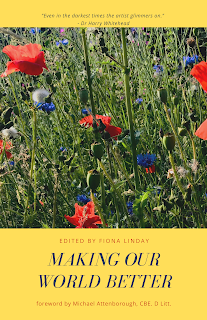
Fiona Linday (ed.), "Making Our World Better"


About Making Our World Better, ed. Fiona Linday

The Making Our World Better Project was launched in April 2021. Fiona Linday led this Arts Council England supported writing activity across the University of Leicester campus. The resulting collection presents the expressive writing of learners from the Attenborough Arts Centre. They were joined by many service users of Leicester Arts in Mental Health, Leicestershire Partnership NHS Trust, and several Creative Writing students from Leicester’s Centre for New Writing

For a year, workshops prompted these three groups to respond to the title of Making Our World Better. Fiona helped develop these pieces of work, by encouraging wide engagement and collaboration. The contributors were inspired to write poetry and flash fiction reflecting on their wellbeing during lockdown while considering their future within our environment.

The anthology features work by Mark Gwynne Jones, the commissioned poet from the partner organisation Renaissance One and guest author Matthew Tett. Fiona also models her writing alongside sharing that of others, joining in this active learner challenge by contributing new poetry and stories. The anthology includes creative work by University of Leicester students Isobel Copley, Will Preston, Laura Besley, Tracey Foster and Sam Bouch. 

Below, you can read about the editor, and a sample from the Foreword to Making Our World Better. You can find more details about the anthology on the publisher's website here


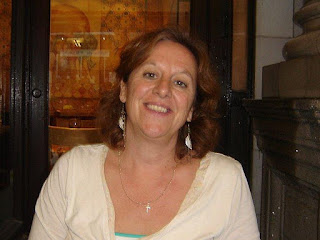
About the editor


Fiona Linday’s background is in school learning support. She is a Creative Mentor with the Mighty Creatives. Fiona presents this second Leicester anthology collaboration extended to students. That project comes after a decade of the freelance facilitating of vocational creative writing to lifelong learners. In 2019, her first commissioned anthology, Family Matters, featured a dozen new Attenborough Arts Centre writers alongside established guest authors. The Arts Centre offers a diverse arts programme to inclusive learners. With the help of several partners and Dahlia books, during lockdown she adapted her practice to achieve comprehensive engagement through delivering blended workshops.


From Making Our World Better, ed. Fiona Linday

Foreword, by Michael Attenborough, CBE 

Amidst the widespread chaos and distressing scale of deaths, the current pandemic has coincidentally thrown up a number of valuable indicators for our collective future. The concern for people’s mental health; the thrilling revelation of a cleaner environment; the scale and sense of loss at the absence of the creative arts; the importance of an enriching education; a greater appreciation of the natural world.

Climate change has brought us to the brink of self destruction. We now need, as a matter of urgency, a creative response from humanity. Focused, articulate and passionate.

Creativity lies at the epicentre of that humanity. It nurtures the invisible part of our health; our emotional, psychological and spiritual health.

Our ability and freedom to express ourselves is a basic human right, one which feeds humanity’s understanding of itself and its relationship with the rest of the world. Cultural communication has the capacity to enlighten, challenge, excite and inspire. It expresses our individual and collective identities, needs and aspirations. A civilised society is one that is in constant dialogue with itself, one of evolutionary discovery and growth.

This exciting new anthology is one vital part of this creative movement.


Wednesday, 9 February 2022

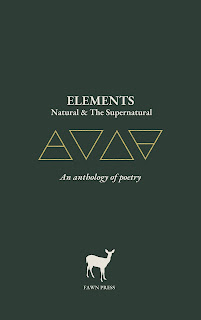
Scarlett Ward Bennett (ed.), "Elements: Natural & The Supernatural"


About Elements: Natural & The Supernatural, ed. Scarlett Ward Bennett

Elements is an anthology of poetry inspired by the natural and supernatural elements of the universe and beyond. From the molecular chaos of running water and the impatient budding of leaves in Spring, to the whispering aether that fills the darkness of night, this anthology explores and celebrates the natural world, spiritual entities, and the forces at work all around us. It is the first title published by new publisher, Fawn Press, and is edited by Scarlett Ward Bennett with the help of Lexia Tomlinson and Konnie Colton.  


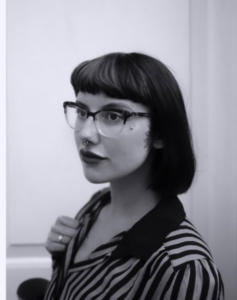
About the editor

Scarlett Ward Bennett is a poet, workshop facilitator, editor and Director of Fawn Press. She founded Fawn Press in August 2021, with a vision of helping to bring beautiful poetry anthologies, pamphlets, and collections into the world. Her debut poetry collection Ache was released in 2019 with Verve Poetry press, and her work has featured in Under the Radar, Eyeflash Poetry, and Burning Eye. She is a workshop facilitator for Writing West Midlands and Homegrown 31, and visits schools around the country to deliver fun and engaging workshops to young people. She has worked as editor for On Your Doorstep Magazine and has worked as an editor for single-poet projects. She came runner up in 2019’s Verve Community competition, judged by Joelle Taylor, and the Wolverhampton Literature Festival Competition, judged by Roy McFarlane. Scarlett was nominated for a Sabotage Award for Best Spoken Word Artist in 2018, and in 2016, her poetry evening Cafe Del Nino was nominated for Best Spoken Word event.


About the publisher

New publisher Fawn Press aims to publish beautiful books of exceptional poetry, as we believe that poetry has the power to change lives through that transcendental connection between writer and reader. Storytelling lies at the very soul of our experience as human beings, connecting us since the dawn of time. We hope to be a platform that welcomes all writers, rejecting elitist and pompous attitudes to publishing in favour of an inclusive approach, whilst maintaining a high quality of exceptional writing that excites and inspires: “Poetry that takes you by the hand and leads you into the woods.” Fawn Press emerged from a passionate love of books and literature, as well as the recognition that the world needs more representation of new and under-represented poets. We are dedicated to the continual growth, education, and application of diversity.

Below, you can read two sample poems from our new anthology.


From Elements

Oxygen

Think of a million mouths pursed into an O
and inhaling together, one giant in-suck.

Forget that dream where you always wake
gasping and clutching at your throat.

Think of bubbles rising in a lake –
like them we must release ourselves towards air.

Now that the cool has come, the edges
have softened in the garden a little, our wren

is at ease with herself and we of late
have taken to sitting out, fanning ourselves

and watching the deepening shadows.
There is an art to this – to breathing easy;

half lung-capacity and half blind faith
that the next breath will come, 

that we will not flounder and choke
on our filthy emissions, on sticky particulates,

that we will, somehow, mostly, get it right.
Not unlike like that river fish, the pike,

who lords it over his river underlings,
his green slime-shimmer stalled among the weeds,

his razor- jaws, so cruel, so cannibal,
his habit, or if you like, his trick

of flicking his prey to swallow it head first,
and whole, and live.

How he only rarely misjudges, gags,
thrashes a little, turns belly up and dies.

- Róisín Tierney

Ode to the Mirror Carp

I.
Look! How they spin, fins vibrating and O-mouthed, 
scales beating in a blood-rush. 

Mother asks: have you ever heard a fish scream? 
It’s like a body rupturing, eating itself whole before re-entering the womb.

This is how girl becomes woman.

II.
There’s a burning in their stomachs only death can cure.
Their hunger? Watch it rage, it’s the only thing that draws fish out of water. 

See their bodies pirouette for the last time,
they’ll stop squirming soon. 

This is how a woman lives. 

III.
Mother reels them in. 
I have her hands – I know, mine are just as impossible to hold.

Dinner will be served soon. 
I open and close my mouth, and swim, and swim. 

This is how we survive. 

- Nabeela Saghir

Monday, 13 September 2021

Michelene Wandor, "Critical-Creative Writing: Two Sides of the Same Coin: A Foundation Reader"


Michelene Wandor is a playwright, poet, fiction writer and cultural critic. She has taught Creative Writing for over three decades, currently as tutor on the Distance Learning MA at Lancaster University. Her most recent poetry collection is Travellers (Arc Publications).

You can read more about Travellers on Creative Writing at Leicester here. Below, you can read about her new book, Critical-Creative Writing: Two Sides of the Same Coin.


About Critical-Creative Writing, by Michelene Wandor

Critical-Creative Writing: Two Sides of the Same Coin is a unique Reader, bridging the gap between Creative Writing (CW) how-to handbooks, and anthologies of Literary and Cultural Theory. This ground-breaking collection reveals the historical roots of many of the pedagogic concepts which underlie the critical study of CW. 

Graven images from the Old Testament are echoed in classical disquisitions on mimesis, which, in its turn, resonates within nineteenth-century realism and naturalism, all presaging one of CW’s most familiar mantras, ‘write what you know.’ The twentieth-century development of literary criticism travels alongside, and into, the philosophical and linguistic foundations of Literary and Cultural Theory, exploring received concepts of text, genre and point of view.

This is an indispensable text for CW lecturers, under- and post-graduate students. The Reader shows how seminal writers and thinkers have, over the centuries, considered imaginative writing: Aristotle, Plato, Montaigne, Milton, Sidney, Shakespeare, Pope, Browning, Wordsworth, Keats, Kant, Burke, Wollstonecraft, James, Ruskin, Quiller-Couch, T. S. Eliot, F. R. Leavis, Woolf, Barthes, Bakhtin and many others provide a roll-call of searching, sometimes contesting, voices.


Monday, 6 September 2021

Paul McVeigh (ed.), "The 32: An Anthology of Irish Working-Class Voices"


About The 32

The Observer recently described Kit de Waal’s My Name Is Leon and Paul McVeigh’s The Good Son as the 'exceptional working-class novels from the last few years' so it seems apt that Kit passed the baton from her bestselling Common People anthology to Paul McVeigh to edit The 32: An Anthology of Irish Working Class Writers.

Like Common People, The 32 is a collection of essays and memoir, bringing together sixteen well-known writers from working-class backgrounds with an equal number of new and emerging writers from all over the island of Ireland. There are contributions from Kevin Barry, Roddy Doyle, Lisa McInerney, Danielle McLaughlin and Eoin McNamee to name a few.


About the editor

Paul's debut novel, The Good Son, won The Polari First Novel Prize and The McCrea Literary Award, and was shortlisted for many others including The Prix du Roman Cezam. 

Paul began his writing career as a playwright and comedy writer. His short stories have been in numerous anthologies, journals and newspapers, as well as on BBC Radio 3,4 & 5, and Sky Arts. He co-founded the London Short Story Festival and is associate director of Word Factory, London, ‘the UK's national organisation for excellence in the short story’ (The Guardian). He co-edited the anthology Belfast Stories, and edited Queer Love & The 32: An Anthology of Irish Working Class Voices. He has judged numerous literary prizes, including The Edge Hill Short Story Prize, The Dylan Thomas Prize and, currently The V. S. Pritchett Short Story Prize for the Royal Society of Literature. His writing has been translated into seven languages. His website is here

Below, you can read an excerpt from Paul's Introduction to The 32, which introduces this brilliant collection of personal essays and memoir.


From the Introduction to The 32, by Paul McVeigh

If one of the defining characteristics of the wealthier members of our society is the desire to pass on their riches and privileges to their progeny to maintain the status quo, I find that for the working class who’ve achieved success in the arts, many become passionate, if not warrior-like, about passing on their wealth in precious knowledge to those of their feather who are following behind, to bring about change; the cartography for navigating the obstacles on the way to joining them. I’ve also described it as ‘leaving a trail of breadcrumbs’ and Kerry Hudson recently in the Guardian as ‘send[ing] the elevator down.’ As a working-class artist, it can often feel that on your journey you watch others flying past because they have a car while you are on foot, watch others waved through at gatekeepers’ check points while you are stopped and found to be carrying the wrong papers. Successful working-class artists often travel between worlds and are likely to pull over and offer you a lift. 

Kit de Waal is a prime example. Having gotten a substantial three-book deal on the back of her debut, My Name is Leon, Kit de Waal used some of the money to set up an annual scholarship at a London University for a student from a marginalized background. She also came up with the idea, and raised the funding for, Common People: An Anthology of Working-Class Writers. The book contained thirty-two pieces of memoir about working-class life, sixteen established and sixteen new writers, including an essay by Dave O’Brien on the impact that class background has on your chances of breaking into the publishing industry as a whole. The statistics are shocking in the UK and you can check out that essay, or, online, find numerous surveys conducted by a number of organisations, such as the Society of Authors, some including data on Northern Ireland. Though some research has been done in Ireland recently, the statistics are largely unknown but you can read an essay which raises the subject at the end of this book from Dr Michael Pierse.

How did The 32 come about? The short version is, Common People was a huge success and while touring festivals in Ireland with the book, Kit de Waal was asked on many occasions ‘will there be an Irish version?’ and voilà! It was by no means a simple transplanting, however. Some questions I’ve been asked might be best answered here, briefly. The name change. The phrase ‘common people’ didn’t have the same connotations in Ireland as it did across the water, so we needed a new title. As there were thirty-two contributors and the book would be all-island, I thought The 32 would work and changed ‘writers’ to ‘voices’ as there were a couple of contributions that wouldn’t be from writers. 

Those commissioned were chosen due to a number of factors. Most, I, or in some cases Kit, had worked with in the past, we knew their background and interests, and that they could be persuaded to come on board to lend their talent and literary weight to the topic and the project. I tried to find a spread around the island and a variety of forms and genres. The expression ‘you have to see it to be it’ was on my mind. As a working-class boy from Belfast, I never thought I could be a writer. This may sound strange to some, but if I’d known a working-class boy from the north became the Books Editor of The Irish Times, I think it would have impacted what I thought might be open to me ...


Wednesday, 31 March 2021

Merryn Williams (ed.), "Poems for the Year 2020: Eighty Poets on the Pandemic"


About Poems for the Year 2020
Thousands upon thousands of poems were written in the unforgettable year 2020, when
corona virus changed the world. Eighty of the best have been carefully selected for Shoestring's new anthology. They come from all five continents and all corners of Britain, and look from several different angles at the crisis. They are not all about doom and gloom. Sickness, bereavement and isolation are all here, along with empty cities and animals roving the streets, but there are also some very funny and life-enhancing poems about how people are coping in extraordinary times, and intend to come through.

Contributors include: Anon, Mona Arshi, Adrian Barlow, Meg Barton, Denise Bennett, Matt Black, Janine Booth, Alison Brackenbury, Melanie Branton, Carole Bromley, Simone Mansell
Broome, Rip Bulkeley, Maggie Butt, Ian Caws, Gladys Mary Coles, Deborah Cox, Barbara Cumbers, Tony Curtis, Ann Drysdale, Vicki Feaver, Paul Francis, Owen Gallagher, Ann Gray, Paul Groves, Jill Hadfield, Alice Harrison, Gail Holst-Warhaft, Joy Howard, Keith Hutson, Lesley Ingram, Chris Jackson, Rosie Jackson, Mike Jenkins, Roz Kaveney, Angela Kirby, Camilla Lambert, John Lanyon, Gill Learner, Emma Lee, Pippa Little, Marilyn Longstaff, Deborah Maccoby, Mark McDonnell, Gill McEvoy, Jennifer A. McGowan, Anathema Jane McKenna, Alwyn Marriage, Deborah Mason, Kathy Miles, John Mole, Judi Moore, Lucy Newlyn, Patrick Osada, Antony Owen, Harry Owen, M.R. Peacocke, Megan Peel, Clive Perrett, Pauline Prior-Pitt, Rita Ray, Padraig Rooney, Lesley Saunders, Brighid Schroer, Robert Seatter, Clare Shaw, Jay Sizemore, Paul Stephenson, Anne Stewart, Sean Street, Todd Swift, David Tait, Wisty Thomas, Serin Thomasin, Nick Toczek, Christine Vial, John Powell Ward, Merryn Williams, Stephen Wilson, Gregory Woods, Neil Young.

You can see more information on the publisher's website here. Below, you can read about the editor, and two poems from the anthology. 


About the editor
Merryn Williams has published five collections of poetry: the fifth is The Fragile Bridge: New and Selected Poems (Shoestring Press). Her latest book is Mansfield Park Revisited (Plas Gwyn Books), an updating of Jane Austen's classic. She spent the year 2020 reading literally hundreds of poems about Corona virus and lockdowns. Her website is here.


From Poems for the Year 2020

Threads

          for my son, Silas, NHS anaesthetist and rock-climber

Dangling on a rope
hung from a cliff-top
you look like a tiny spider 

spinning a thread
the slightest gust
could snap. 

Now your patients
are hanging on threads.
And all of you 

working on wards
where a terrible
scissor-wielding hag

decides who to spare,
which thread
next to cut.


Note: the ‘terrible scissor-wielding hag’ is Atropos, eldest of the three Fates.

 - Vicki Feaver, South Lanarkshire


Geoffrey Chaucer Cleans the Beach

Whan the temperature in June is hotte
Than longen folk to doon what they should notte
And specially from every shire’s ende 
Of Engelond to Bournemouthe they wende.
 
Some had woken with the lark
To finde a space where they could parke
Otheres parken everywhere
Legal or not, they did not care
 
And loutes imbiben swich liquor
Of which vertú engendred is the boor
And disputheth eche hir beachside space
And one anothere puncheth in the face
 
Then when al that motley bunch were gonne
Cleanen we the beche anon
And finden underwear and socks
And defecations in a box
 
And so was I seke of hem everichon
That I wrote to my PM anon
To demaunde new laws  straight be doon
But from him answere was there noon.

- Jill Hadfield, New Zealand

Monday, 30 November 2020

Black Lives Matter: Poems for a New World

By Ambrose Musiyiwa 


In May 2020, George Floyd’s murder was captured on mobile phone video by active bystanders. The video showed a white policeman pressing his knee against Floyd's neck and keeping it there for close to nine minutes until Floyd died. The murder triggered months of mass protests in the United States and around the world.

The protests have been taking place in the midst of a global pandemic that, in Europe and the United States, is also disproportionately killing people from Black, Asian and ethnic minority backgrounds.

An entry on Wikipedia highlights how "Black Lives Matter," "Hands up, don't shoot," "Am I a threat?," "I can't breathe," "White silence is violence," "No justice, no peace," "Is my son next?," "Get your knee off my neck," and more, have become rallying calls against the killing of Black people by the police and against racism, racialised inequality, discrimination, violence and oppression.

Around the world people are demanding justice and change.

Black Lives Matter: Poems for a New World (CivicLeicester, 2020) came out of a June 2020 call for poems and short prose on the theme, "Black Lives Matter."

We were looking for submissions exploring any of the images, issues, histories, lives, demands and outcomes that are being highlighted by Black Lives Matter and current and past protests. We were interested in submissions from writers of all ages and backgrounds, based anywhere in the world.

We received close to 500 poems from over 300 writers around the world. Black Lives Matter: Poems for a New World presents 107 of these poems from 95 writers. The poems were selected for how they respond to the theme and for how they speak to others in the anthology.

I commend the poems to you and hope they will also encourage you to keep insisting that Black Lives Matter in your village, town, region and country and in the places from which you get your livelihood, goods and services.

Writers featured in the anthology include (in alphabetical order): Peter A, ‘Funmi Adewole, Mayo Agard-Olubo, Sandra A. Agard, Jim Aitken, Nick Allen, Rosalie Alston, Judith Amanthis, Adrienne Asher, Mellow Baku, Sharon Cherry Ballard, Panya Banjoko, Tanisha Barrett, Lesley Benzie, Conor Blessing, Tim Bombdog, Richard Byrt, Julian Colton, Mark Connors, John Cooper, Tracy Davidson, Giles Dawnay, Martins Deep, Sara Eliot, Blake Everitt, Ravelle-Sadé Fairman, Mike Farren, Paul Francis, Michelle Fuller, Harry Gallagher, Mike Gallagher, Moira Garland, Kathy Gee, Rachel Glass, Lind Grant-Oyeye, Prabhu S. Guptara, Nusrat Haider, Jean Hall, Roger Hare, Samantha Harper-Robins, Deborah Harvey, Jem Henderson, Kevin Higgins, Arun Jeetoo, Hamdi Khalifa, Kihwa-Endale, Tom Krause, Laurie Kuntz, D.L. Lang, Charles Lauder Jnr, Adriano Timoteo Llosa, Rob Lowe, Paul Lyalls, Margaret Mair, Isabella Mead, Lester G. Medina, Maureen Mguni, Jenny Mitchell, Leanne Moden, Cheryl Moskowitz, Hubert Moore, Loraine Masiya Mponela, Ambrose Musiyiwa, Linda Nabasa, Russell Nichols, Chad Norman, Selina Nwulu, Sarah Nymanhall, Revd Dr Catherine Okoronkwo, Nasrin Parvaz, Tracey Pearson, Alexandros Plasatis, steve pottinger, Judith Prest, Marilyn Ricci, Bethany Rivers, Jenny Robb, Caroline Rooney, Eddie Saint-Jean, Chrys Salt, Barbara Saunders, Joel Scarfe, Lily Silverman, Suzan Spence, Gerda Stevenson, Laila Sumpton, Samir Sweida-Metwally, George Symonds, Deborah Tyler-Bennett, Cheryl Vallely, PR Walker, Patricia Welles, Michele Witthaus, and Kathy Zwick.

Black Lives Matter: Poems for a New World is available here


About the author
Ambrose Musiyiwa coordinates Journeys in Translation, an international, volunteer-driven initiative that is translating Over Land, Over Sea: Poems for those Seeking Refuge (Five Leaves Publications, 2015) into other languages. Books he has edited include Bollocks to Brexit: an Anthology of Poems and Short Fiction (CivicLeicester, 2019) and Leicester 2084 AD: New Poems about The City (CivicLeicester, 2018). He is the author of The Gospel According to Bobba

You can read an interview with Ambrose on Everybody's Reviewing here