Showing posts with label journalism. Show all posts

Saturday, 12 November 2022

I.M. Ian Jack (1945-2022): An Appreciation

By Jonathan Taylor


On 28th October 2022, author, editor and journalist Ian Jack died aged 77, after a short illness. At different times, he was editor of The Independent on Sunday, Granta Magazine, and regular columnist for The Guardian

This article, though, isn't intended as an obituary or biography. I didn't know Ian long or well enough to write about his whole life, and only met him a handful of times. You can read an obituary in The Guardian here. Rather, I want to write a short piece about him and the huge impact he had on me - as with many other authors whom he edited and mentored over the years - despite the relative brevity of our association. 

I first met Ian back in 2005. He was then editor of Granta, and had been since 1995. He published my article in the magazine, and then my memoir - my first non-academic book - in 2007, with Granta Books. I was immensely lucky to have him as my first editor, and I learned such a lot from him. He was a brilliant editor, taking me through the book line-by-line, image-by-image, chapter-by-chapter, never pulling any punches (the first edit he insisted on involved cutting 40,000 words). I was going through a tough time in my day job in the mid-2000s, and my association with Ian and Granta felt like an antidote to that, a haven, the opposite of the malignant everyday. Ian was encouraging and critical, kind and insightful, and really seemed to care about the books and articles he oversaw. I visited him a few times in London to talk through the book and edits, and was welcomed into his house, where I have happy memories of sitting in his small walled garden, drinking beer and talking about my book, future plans - as well as memoirs, fathers, hobbies, beer, old-school sweets, trains, universities and so on. 

Ian seemed interested in everything, and he remains a model for me of editing and writing in that regard: an author is someone for whom nothing is uninteresting, nothing is "boring," who pays attention to the world; an author is someone for whom the small and apparently trivial or provincial have their own fascination; an author is someone who remembers what others forget; an author is someone who sees significance and connection in a world which is all-too-ready to throw things away, forget, conceal, or ignore them. As well as an editor, Ian was a unique and brilliant journalist, who understood the importance of memory, preservation and the interconnectedness of things. Rather than writing about "now" in isolation, his journalism is also about how that now connects with the past. This is surely the very best of journalism - to understand "now" in context, not as an isolated symptom. His wonderful book of essays The Country Formerly Known as Great Britain (2009) explores its subjects from four dimensions, connecting the personal and the political, the now with the then. Ian's work is the place, I think, where journalism and creative non-fiction meet - politically-informed, fascinating, wise, and beautifully written. 

I will miss Ian a lot, as will the writing world in general, which needs more enthusiasts like him. I feel sorry not to have seen him in the last few years. But I do feel very lucky to be able to count him as one of my mentors, and to think of myself as one of his many proteges. 


Thursday, 6 January 2022

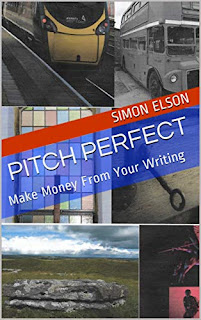
Simon Elson, "Pitch Perfect: Make Money From Your Writing"


Simon Elson is a Freelance Features Writer. His articles have appeared in over a dozen national magazines including Best of British, Britain at War, Derbyshire Life and Writing Magazine. He also writes for the popular cycling website Veloballs.com and has been a guest blogger on The Huffington Post.  His self help health book Sugar Beat was a top-10 bestseller on Amazon. His features have covered subjects ranging from transport to history to fitness. His new e-book is Pitch Perfect: Make Money From Your Writing. You can see his online portfolio here.


About Pitch Perfect, by Simon Elson

I’d been writing for years; unfinished novels lay neglected in a bottom drawer - okay, actually, nowadays they sit on a flash drive in a coffee cup in a display cabinet. After abandoning the fiction (for now), I started blogging, following a shout out on a cycling forum. Then I started my own blog. A large online newspaper followed that. When they accepted several of my pieces, I thought I’d made it as a blogger. Then the realisation dawned: they were earning money from adverts on my posts, but I was being paid in kudos. As much as I appreciated the exposure and links to my own blog they permitted (traffic to my own site did go up when I wrote for them) I was getting jack-all for my toil.

I decided to start writing for magazines and I wanted paying for my work. Some websites will pay for your words but not many. Without a degree in anything, only a GCSE in English Language and a day job in sales, I wondered how to convince magazines that I was a serious features writer and get paid for my writing output. 

I managed through a few simple steps to become accepted in this competitive market. In this book I take the reader through the easy process I came up with, to become a successful freelance features writer - from blogging, through prize letter-writing, to honing your skills, to your first feature article and the dreaded pitch to an editor. Looking professional and taking your own images to accompany the articles are also covered in depth.  


From Pitch Perfect

From Chapter One – Honing Your Writing Skills

If you're reading this I assume you can write blog posts and articles. But ask yourself truthfully: are they any good? They may be, but asking your Mum or Auntie Edith to read the website you’ve created is often useless. They will be your biggest fan - you could take the shopping list off the fridge door and post it online and they will love it, or say they do, as that is what they think you want to hear.

You need an editor to reject articles or ask for alterations to make them editorially tighter or punchier. You can’t be your own editor. Trust me, it doesn’t work because you will either be over-critical and bin/delete everything or, on the flipside, it will all seem excellent and perfect.

So how do you get an editor? Easy, you borrow one. As I said in the introduction, I’ve written for other people’s blogs. There are lots of websites out there that are crying out for content. Find one on a subject that interests you and offer your services to them. I answered a request on a cycling forum from a fellow member requiring content for a new website he was launching. I answered the call and became a regular contributor to it. Over the years, he gave me advice on style and technique. On the odd occasion he gave me a commission, a subject he wanted covering would drop into my inbox. I happily wrote the articles and submitted them. He became my first editor. He helped my writing confidence enormously by making me write an ebook on Type 2 diabetes and cycling based on an article I sent in, and then editing it for me. It became a bestseller on Amazon. 

Blogging for someone else can give you tremendous confidence. When the cycling website finished several years later, I approached the Huffington Post. They were a bit different; they didn’t offer advice on content but did reject more ruthlessly than the cycling blog. I was happy to write for them for free because of the readership - hundreds of thousands of page clicks every day and syndicated to other countries. A post on staycations went viral, all over Twitter, but unfortunately it still didn’t earn me a penny. It was time to approach the magazine market ...


Wednesday, 8 September 2021

Ruth Hunt, "The Single Feather"

In this article, author and journalist Ruth Hunt talks about her novel The Single Feather, and the experiences behind it. You can also read an excerpt from the novel. 


About The Single Feather, by Ruth Hunt

The idea of The Single Feather came to me as drastic benefit cuts for the sick and disabled working-age adults were announced, not only threatening the lives of those with disabilities but also causing a potential conflict between the younger disabled and the elderly.

I wanted a disabled lead character (Rachel) who was just as complicated as any of the other characters. My hope was as readers progressed through the novel they would see Rachel as a character, not a disabled character.

Rachel had just escaped from a traumatic experience. She was dropped into a community with people much older than her. This was just at the point when the ‘scroungers’ debate was going on. In the case of The Single Feather this ‘community’ was an art group. I chose art due to the ability for it to be transformative, especially when there has been trauma..

Of special interest was how the characters' (in some cases, secretive) pasts have shaped their futures, directing who they’ve become as people and how they interact with others. This was why I chose a quote from Chris Rock as my epigraph: 'When you meet somebody for the first time, you’re not meeting them, you’re meeting their representative' (Bigger and Blacker Tour 1999).

The title comes from Rumi:

          With friends you grow wings
          Alone
         You are a single feather in disgrace
         With them you master the wind
         But alone
         You’re blown in all directions.

For years, friends on social media only met my ‘representative,’ the real Ruth unsure of just how people would take it if I revealed the nature of my ‘accident.’ Eventually I took a deep breath …


Thirty years ago

Problems emerged in the first year of my A-Levels when I had my first period of mania. Not that long afterwards I fell into a deep depression and had to be admitted to a psychiatric hospital.

By the time I was discharged I had only just emerged from the near-catatonic state I had been in, and my parents were concerned it was too soon. They were reassured by the psychiatrist who told them there would be community follow-up from a CPN. 

I started to get my energy back, but my mood was still low. One day I climbed up onto a window ledge, my body dropping between 35 to 40 feet and landing on the backs of my heels. The shock went straight up my back, breaking L1, L2 that were ‘burst,’ causing extensive damage including spinal cord damage. 

Emergency surgery left me as an ‘incomplete’ paraplegic with some sensation on the front of my legs, but apart from that a lack of mobility and sensation below my waist – which also meant my bladder and bowel no longer worked.


The move into journalism (2015 onwards)

I have since been diagnosed with kyphosis, and spinal cord-related osteoporosis. When I was in my thirties my right leg had to be amputated due to a neuropathic sore on my heel that had led to an infection in the bone.

Due to my disabilities deteriorating at a frightening speed in the period between The Single Feather being finished and the press attention, I knew it would be very difficult to write another novel. But being interviewed gave me the idea of moving into journalism.

I completed an Arts-based degree with The Open University, before studying for my journalism qualifications, finishing with a Postgraduate Diploma in Journalism. Throughout, I have been writing features with a focus on social justice such as physical disability, mental illness, and social care. Some of my work can be found here.

Life is still a struggle. I have about three hours a day when I am not affected by pain and the side-effects of heavy-duty medication, so must cram any writing work into that slot. When I look back to the few years before and since 2015, it seems unfathomable how I ever managed to write a novel and pass these qualifications.

Below, you can read an excerpt from The Single Feather. You can also see a review of the novel on Everybody's Reviewing here


From The Single Feather

(In this excerpt, the two main characters Rachel and Anne are meeting for the first time so that Rachel can show her the paintings and ask whether she can join the art group) ...

I was taken aback to see a tall lady, in her late fifties, I guessed, wearing a duffle coat, with a royal blue woolly hat and matching gloves.

‘Oh, I’m sorry I didn’t realise. Are you Rachel?’ She looked crestfallen.

‘Yes, do come in, er ...’

‘Anne, Anne Wilby.’

An awkward moment followed, as she didn’t give me time to move away from the door. Due to the stair lift and my wheelchair, space was limited in my hall, which meant she had to squeeze through the gap. It didn’t help she was plump, I followed her into the living room where I could see her bend over the coffee table and look at my painting.

‘Do you like it?’ I tried to moisten my lips with my tongue.

‘Who lives with you?’

 Anne sat down on the edge of the blue chair and took off her woolly hat to reveal light brown and greying hair, cut into a helmet style that framed her face. Her features were etched with wrinkles and looked as if they’d been barbecued in the sun.

‘Nobody.’ I nodded towards the coffee table. ‘That one took me a month to complete.’

‘A month? I can sometimes spend months and months on just one paining, it’s marvellous that with everything you can still paint, and nobody looks after you, not even your parents?’


Wednesday, 11 September 2019

Work Experience, Copywriting and Journalism

By India Wentworth


It all goes back to A-Levels. I knew I wanted to go into journalism but also wanted the option to teach at some point in the future too. English was always my favourite subject, and kept things broad, so it seemed like the best option as my undergrad. 

Now that I’ve graduated, I’m about to complete my journalism diploma with the National Council of Training Journalists (NCTJ). This is an accredited qualification that allows me to eventually secure a trainee journalist position (fingers crossed). I decided to do this as a distance learning course, and gain work experience by taking advantage of the flexibility this route offers. I was advised on Linkedin that the NCTJ accreditation with lots of work experience was what employers would want. As a side note, I’d definitely recommend using LinkedIn as a way to ask questions, because although a lot of people will never reply, some will, and as a result you gain valuable advice around the industry you’re interested in.

My experience with DeltaNet International came up with an email from the university careers team that went out to all students. They were looking for a copywriter, and I figured that any experience in writing was worth having. The role wasn’t limited to writing for the website; I was working on a large-scale digital PR project, as well as getting involved with other ad-hoc marketing duties, such as creating a marketing hand-out for exhibitions and conferences. 

I was in charge of creating databases to work out what questions people were asking on Google around the topics DeltaNet dealt with as a company. From these databases I then went on to write the articles – they were like an extended FAQs section to the website. These pieces explained things that might seem quite dry and confusing (like cyber security) and turned them into an approachable, easy-to-understand articles for people to read. The result of these articles have been an increase in business for DeltaNet because more people are coming to the website, and consequently their numbers of customers have shot up too.

I may not be aiming for a career in Marketing, but the skills I gained from my two summers with DeltaNet have enriched my CV massively, as well as getting my work read by hundreds of people - some of the articles have more than a thousand views! 

Experience is everything nowadays. The extra things you can get on your CV, in addition to your degree, will make you stand out, especially in the creative industries. 


About the author
India Wentworth has recently graduated from the University of Leicester in English. Her aims are to go into broadcast journalism after completing the NCTJ diploma over the next year. As a northern girl from York, she is looking to take advantage of the ever-growing media in the northern cities such as Leeds and Manchester. 

Thursday, 8 February 2018

3 Guest Speakers in Week 3

By Charis Buckingham


Leicester University welcomed three guest speakers this week to discuss various applications of Creating Writing: journalism, authorship and publishing.

On Monday, we heard from campaigning journalist Emma Howard. A previous graduate of the university, Emma has worked for The Guardian and currently writes for Unearthed, an investigative news platform launched by Greenpeace. Emma directed her talk primarily to those considering journalism, with the aim of providing information she wished she’d known. Topics ranging from on-the-desk stresses, her goal as a journalist and how influential the media can be; she held nothing back. She discussed not only her successes, but her mistakes along the way. It was open, honest, and utterly compelling.

On Tuesday, novelist Mahsuda Snaith gave a guest talk and reading. Mahsuda is a Leicester-based author, whose debut novel, The Things We Thought We Knew, was published in June 2017. She discussed her writing processes, her experience with editors, and, excitingly, read from her novel. Her advice was fascinating – she highlighted the importance of feedback, both online and from writers’ clubs, the necessity of being critical of your work, and assorted editing tips. For anyone looking to write or complete a novel, this talk was a must-see.

Cecilia Bennett from Sweet Cherry Publishing provided a very different insight into the creative world. Rather than being a writer herself, she edits others' books; and as Managing Editor of the company, she helps to decide which books are selected to be published. Much of the talk, therefore, focused on what Sweet Cherry Publishing looks for in books, the roles of the different publishing departments, and the things that authors should think about before submitting their work. Cecilia Bennett did a fantastic job of addressing the many different aspects and stages of publishing, and her passion for working with authors and putting their work into the world really shone through. The talk was a fitting end to a superb week. 


About the writer
Charis Buckingham is an aspiring novelist, and is studying for an MA in Creative Writing at the University of Leicester.