Showing posts with label featured writer. Show all posts

Friday, 30 April 2021

Catherine Menon, "Fragile Monsters"


Catherine Menon is Australian-British, has Malaysian heritage and lives in London. She is a University lecturer in robotics and has both a PhD in Pure Mathematics and an MA in Creative Writing. Her short story collection, Subjunctive Moods, was published by Dahlia Publishing in 2018. Her debut novel, Fragile Monsters, was published by Viking in April 2021. Her website is here.


About Fragile Monsters

Mary is a difficult grandmother for Durga to love. She is sharp-tongued and ferocious, with more demons than there are lines on her palms. When Durga visits her in rural Malaysia, she only wants to endure Mary, and the dark memories home brings, for as long as it takes to escape.

But a reckoning is coming. Stuck together in the rising heat, both women must untangle the truth from the myth of their family's past. What happened to Durga's mother after she gave birth? Why did so many of their family members disappear during the war? And who is to blame for the childhood tragedy that haunts her to this day?

In her stunning debut novel, Catherine Menon traces one family's story from 1920 to the present, unravelling a thrilling tale of love, betrayal and redemption against the backdrop of natural disasters and fallen empires. Written in vivid technicolour, with an electric daughter-grandmother relationship at its heart, Fragile Monsters explores what happens when secrets fester through the generations.

As they will learn, in a place ravaged by floods, it is only a matter of time before the bones of the past emerge.

You can read a review of Fragile Monsters on Everybody's Reviewing here. Below, you can read an excerpt from the novel. 


From Fragile Monsters, by Catherine Menon

‘Aiyoh, Durga, you went to Letchumani for fireworks?’

Ammuma glares at the bright red bag I’m lifting out of my car. The trip’s only taken me an hour, but she’s already moved her rattan chair to the verandah’s edge to watch for me driving back into the compound yard. Her white widow’s sari is immaculate and clean-starched, and her skinny thighs make a shallow, mounded lap. She spends nearly all her time on the verandah now, rocking back and forwards in the sleepy heat. That was the first shock about returning to Malaysia: somewhere in the last decade my grandmother’s become old.

‘Kill us all,’ she adds, ‘these crazy ideas of yours, getting fireworks from the washer-man.’

Or perhaps not that old. She likes proper fireworks, I remember. All noise and glare, with a spice of danger if you stick your nose in too far.

It’s raining, and my sandals slip on the limestone steps as I carry the bag up to her. Sweat trickles down under my nylon shirt; I’ve been back two months but still can’t remember to dress for the climate here.

‘I was going to drive to Kuala Lipis, Ammuma,’ I say, ‘but Letchumani had a sign advertising fireworks and I thought ...’

‘Thought, hanh! Covered market in Lipis for good fireworks only, you should know that, Durga.

‘This mathematics rubbish you study,’ she mutters not quite under her breath, ‘all thinking and never common-sense.’

She’s fetched a plate of pandan cakes while I’ve been out and she pushes them across the table towards me with a not-to-be-argued frown. I left home a decade ago and Ammuma’s convinced I haven’t eaten since. Granddaughters, she thinks, ought to stay where they’ve been put.

‘Too late to change fireworks now also.’ She looks up at the evening sky. ‘Have to manage.’ She’s relishing this, like she does all small crises; running out of onions can last her all day.

‘Diwali puja will do now,’ she tells me briskly. ‘Prayer first, then play fireworks, ah?’

‘What, light the fireworks now? Ammuma, it’s pelting down.’

I sit next to her, on a small wooden bench that she ordered Karthika to move from the front room. I drove up from Kuala Lumpur four days ago, and the house still feels familiar and strange at once. My childhood home, but I can’t quite manage to be sentimental about it. It’s the wrong sort of home, or perhaps I was the wrong sort of child.

Just like on the day I left, the compound yard’s soaked and flooding. There are puddles under the stone walls and a few dry patches near the biggest trees. The angsanas have lost most of their blossom in the rain, and the scatter of yellow petals makes me catch my breath. Another memory, one I hadn’t even realized I’d forgotten: crouching behind those trees playing five-stones with Peony after school. Her laugh, her tangled hair, her fountain-pen tattoos. In Canada I pushed her out of my head, but back here in Pahang she’s everywhere I look. Friends for ever, Durga, she whispers, and for a second I’m fifteen again and everything is about to go wrong.

I take a deep breath, clenching my fists. Of all people, I should know Peony’s gone. Dead and gone; drowned in the banyan swamp fifteen years ago and nothing to be done about it. She’s a null object. She’s a zero module. She’s the limit of an empty diagram.

I unclench my hands and look deliberately over to the angsanas again. They’ve grown since those days, and there’s nothing behind their trunks except a sodden crate of banana leaves for the dining table tonight. I’d forgotten this about Pahang, the way the rain gets under your clothes and under your skin.

‘Durga? Are you listening?’ Ammuma prods. ‘Of course light the fireworks now. It’s Diwali, when else is it we’ll light them? Christmas? Birthdays-graduations? Next you’ll be asking for eating non-veg tonight.’

‘But there’s only us here to see them.’ I’m on edge, arguing when I know I shouldn’t. ‘Why bother just for us, and when it’s raining, too? I never did in Canada.’

Ammuma sucks in her breath, then lets it out again in a shower of scolding words. It’s a festival, she tells me, punctuating her sentences by slapping the broken wicker of her chair, how dare I suggest we ignore it? It’s far more important than rain, she says, far more important than grandmothers, even, and ungrateful granddaughters who’ve forgotten how they were raised.

‘But you don’t even believe in Lakshmi, Ammuma. You never did.’

Diwali’s for Lakshmi, a goddess who’s supposed to visit the brightest and cleanest houses every year. Ammuma doesn’t hold with her and never has: some goddess, she says, to go poking her nose into other people’s housekeeping.

‘Story is important only,’ she insists. ‘Doesn’t matter if it’s true.’

‘But you –’

‘And fireworks important too, for driving away evil spirits. Cannot tell, Durga, when a spirit is walking –’

She stops. There’s a loud clang from the compound gate, then another. Someone’s knocking. I can just make out a figure through the ironwork, then an arm snakes down to open the catch.

‘Who’s visiting today?’ Ammuma mutters to herself, and then the gate opens. A white man walks through, carrying a striped bag. He has a cap of combed brown hair that looks oddly familiar and he’s wearing a neatly tailored suit.

‘Mary-Auntie!’

He ignores the mud and walks jauntily towards us, then sees me sitting next to Ammuma. He stops, squinting against the evening light. His smile falters and loses its way.

‘Durga?’

I start to shake. I know who he is, this man with his John Lennon hair. Peony’s voice is in my head again – friends for ever – and this man is bad news, he’s worst news. He’s fifteen years old news, fresh as yesterday’s eggs.


Thursday, 28 January 2021

Andrew Komarnyckyj, "Ezra Slef"


Andrew Komarnyckyj has been a lawyer, odd-job man, PR Consultant, hospital porter, and plongeur among many other occupations. It’s the classic work history of an author but it wasn’t planned that way. It was a happy accident which has stood him in good stead for writing novels. His literary tastes range across every fiction genre including – perhaps inevitably – postmodernism, with which he has a love-hate relationship. When not writing or reading he loves conversation, listening to anecdotes, craft beers, and hiking in mountains. Andrew’s favourite authors include Russel H Greenan, Vladimir Nabokov, Sebastian Barry,  and Gillian Flynn. On a personal note he’s married with two adult daughters. His published novels are: Ezra Slef, a cross-genre thriller due published by Tartarus Press 14 January 2021; Very Nearly Dead, under the pen name A K Reynolds; Manchester Vice, under the pen name Jack D McLean; Confessions of an English Psychopath, under the pen name Jack D McLean; Thatchenstein,  under the pen name Jack D McLean; Zomcats, under the pen name Jack D McLean; Celebrity Chef Zombie Apocalypse, under the pen name Jack D McLean. 


About Ezra Slef

The pioneering writings of celebrated Russian novelist Ezra Slef have made him a titan of contemporary Postmodernism, with a worldwide following keen to know more about the man behind the books. Enter Humbert Botekin, a disgraced former professor of literature, and Slef’s biggest admirer. He writes the definitive biography of Slef, with compendious notes, an introduction, a list of plates, and a glossary.

But Botekin’s narrative soon spirals dangerously out of control. A supreme egotist, Botekin cannot resist assuming the foreground, so that his ostensible biography of Slef gradually changes into a personal memoir in which we learn far more about the biographer than about his subject. The narrative is both sinister and darkly comic.

Botekin’s secrets include making a Faustian pact with a well-travelled gentleman who bears an uncanny resemblance to the Devil—a likeness the self-absorbed Botekin fails to notice, even as his world collapses around him.

You can read more about Ezra Slef on the publisher's website here

Below, you can read an extract from the novel.


From Ezra Slef

Introduction

There is a body of opinion that Ezra Slef lacks a sense of humour. Nothing could be further from the truth. He has a well-developed, if somewhat eccentric, comedic sensibility. I remember as if it was yesterday the time he pretended not to be at home when I called at his house. It was only after I had knocked on his front door and rung the bell for fully fifteen minutes, and finally, in desperation, shinned up a drainpipe to gain access to a first-floor bedroom via a window carelessly left open, that he emerged from his hiding place and revealed himself to me. He made a great show of false annoyance at my antics, weighing into me with a series of expletives too extreme to repeat here, all the while shaking with suppressed laughter. He was so giddy he needed a glass of his favourite scotch whiskey to calm down.

Although Slef is a public figure known to all, he has a strong desire to keep his personal life private. When I asked if I could write an authorised biography of him, he refused point-blank to permit it. Faced with his intractable position on the matter, I thought the project doomed, until I realised I could use his sense of humour as a means of persuasion. I therefore said, in a jocular manner:

“I am not leaving until you give me permission to write your biography, Mr Slef.”

On hearing these words, he took hold of one of my ears in the same way a schoolmaster might take hold of the ear of an errant pupil, marched me good-humouredly to his front door, and ejected me from his house. The alcohol on his breath swirled around me as I stumbled and fell face-down in the snow. His parting shot, delivered with the deadpan humour which I know to be his trademark, was: 

“You can write what you expletive well like, as long as it doesn’t involve me.”

The door slammed shut behind me as I lay on his path, shivering and nonplussed, wondering what to do next. Then, when I got to my feet, brushing snow from my clothes, the full significance of Slef’s words became clear, and my heart soared.

He had said: “You can write what you expletive well like” – i.e., he gave me his full permission to write his biography; and he had also said: “as long as it doesn’t involve me” – indicating that, as a working novelist, he was far too busy to grant me interviews and give me access to his personal papers, but other than for those two minor impediments, I had the green light to go ahead.

Regrettably, I was unable to interview Slef’s friends to obtain background information about him, because they are writers, critics, journalists, and the like, for whom time is at a premium. I have therefore based my book largely on material in the public domain.

***

List of Plates

Having devoted many years to collecting photographs of Slef to illustrate this work, I met with a last-minute hitch. The images I had lovingly collated could not be used as they were subject to copyright, and the copyright holders were reluctant to allow publication. The issue would have been easily resolved but for the fact that their lawyers behaved like rabid Pit-Bulls, so we have ended up with a biography lacking any photographs of its subject. In order to remedy this omission, I have included in it a number of detailed pen-portraits of Slef. Even if you have never seen a picture of him, by the time you finish reading the book you now hold, you will feel you have looked into his penetrating blue-grey eyes, shaken him firmly by the hand, and perhaps even enjoyed a drink with him in the King’s Arms on Holywell Street, in Oxford.

***

Chapter 1: Origins and Early Life 

Ezra Slef was born in 1960, or something like that. To be frank, I am not interested in his date of birth, and nor should you be. Such detail may be important to the small-minded, but is of no consequence to me. My interest lies only in the grand sweep of ideas. 

He grew up in Russia, which perhaps accounts for his ability to use expletives in creative ways I never encountered until I met him. 

It is easy to imagine the young ES (as I shall hereinafter refer to him on and off  in the interests of brevity) in his hometown of Moscow, a studious child like me, one who was no doubt picked on by his churlish peers. Enduring their mocking laughter every playtime will have been torture for him. It was only to be expected that he would become a bookish type, choosing to spend his days in the school library rather than risk the cruel taunts of his unappreciative peers. Little did they know he was one day to become a celebrated man of letters, standing tall on the world stage of literature. 

There was one lad in particular – Brian Jessop – who made my young life a misery. I am sure Slef had more than his own fair share of Brian Jessops. Perhaps he made light of the situation. I doubt it. It is far more likely he developed a festering hatred for such characters, one which would lead to all manner of unpredictable outcomes in later life.[1] But I am getting ahead of myself.

So precocious was the young Slef that before his teens he was reading a vast range of literature from Beckett to Elliot to Pound. This had to be done in secret as he attended the sort of school where academic achievement was frowned upon, and likely to earn the achiever in question a summary beating at the hands of one of the school’s many fearsome bullies.

What can it have felt like for the young Slef to be so abused by the thugs who patrolled his alma mater in search of victims to prey upon? Drawing on my personal experience, I am able to paint a vivid picture of what he endured and how it must have felt.


[1] Unknown either to me or Jessop at the time, our paths were to cross long after we left school, with seismic consequences.


Tuesday, 19 January 2021

Bruce Harris, "Fallen Eagles"


Bruce Harris is a Devon-based author and poet who has been consistently successful in short fiction and poetry competitions since 2003. Bruce has published three collections of short fiction, First Flame (2013), Odds Against (2017), and The Guy Thing (2018), and three poetry collections, Raised Voices (2014), Kaleidoscope (2017) and The Huntington Hydra (2019). His first novel, Howell Grange, was published in October 2019.

Three of his books, Odds Against, The Guy Thing and The Huntington Hydra were published in aid of the Huntington’s Disease Association.  Bruce’s partner was diagnosed with HD in 2016.

A fourth short story collection, Fallen Eagles, is to be published early in 2021, and it will be in aid of the Huntington’s Disease Youth Organisation. The book includes sixteen ‘coming of age’ stories and a Foreword by the Chief Executive of the HDYO. 


About Fallen Eagles

The title story, 'Fallen Eagles,' is a Hamlet-inspired story about a Scottish boy who loses his idolised mountaineer father in an accident and blames his uncle to such an extent that he contemplates murder. Other stories involve the French Revolution, the First World War and more contemporary situations such as coming out, shaking off the parental yoke and exploring old and new love. Each story explores the diversity of young people’s experience as they emerge into adulthood and the wide-ranging themes are both contemporary and relatable to the modern reader. 

Fallen Eagles has been produced to raise funds for Huntington’s Disease Youth Organisation (HDYO), following Bruce’s civil partner’s diagnosis with Huntington’s Disease in 2016. In her foreword to the book, the Chief Executive of the HDYO, Catherine Martin, says: 

'The theme of Fallen Eagles aligns directly with young people impacted by Huntington’s Disease. Their journey with disease takes them through many twists and turns but their decision to go through genetic pre-diagnostic testing for Huntington’s disease is one of the biggest and scariest points in their lives. A young person at risk of Huntington’s disease has to wait until they turn 18 before they can legally decide to test for Huntington’s disease; this is their rite of passage.' 


From Fallen Eagles

Did he appear behind me, Dougal Murray in his prime, pale and shadowy like a phantom apparition? No, he didn’t. Did his voice come echoing down the hill at me, calling out like some lost spirit? No, it didn’t. The apparition was all in my mind, and the voice like a disembodied whisper which communicated ideas without having to articulate them in so many precisely defined words.

Be aware. Stuart saved my life several times, as I saved his. Be aware. He loved your mother almost as much as I did, and he gave way because she chose me. Be aware. Once in a blue moon, harnesses fail; invisible deterioration, hitherto unrealised missing internal part, untraceable consequences of exposure to extreme climate conditions.

Remember. Violence and vengeance are a downward spiral, kill or be killed, until, like the mightiest and proudest eagle, your own fall will come. Remember. The eagle’s blood is still on your hands, human blood is about to follow, and soon, inevitably, your blood will be on someone else’s hands. Remember. Your mother’s heart has been broken once; breaking it again will finish her for ever. Remember. You have almost discarded two people, your lover and your brother, who care for you deeply; you are about to break their hearts as well. Remember, Duncan, remember. These things are true, and you know them to be so.

The words, sentiments, assertions, were invisible, but they were not there in my head because of my own independent consciousness. Someone external to me put them there. I found myself looking around me, ridiculously, for someone, anyone, who was in my vicinity. But there was nothing but the air, the sky and the braying conversation of well-bred voices, growing gradually louder.


Monday, 11 January 2021

Naomi Krüger, "May"


Naomi Krüger is a writer and academic based in Lancashire. Her short fiction has been commissioned by Lancaster Litfest, commended in Aesthetica and published in various literary journals. Her debut novel May was published in 2018 by Seren. It was highly commended in the Yeovil Prize, longlisted in the Not the Booker Prize and described by Wales Art Review as ‘a rewarding read: an ambitious novel that speaks to our times.’ Naomi has an MA and PhD from Lancaster University and lectures in Literature and Creative Writing at the University of Central Lancashire. Her website is here. You can read a review of May on Everybody's Reviewing here.


About May

The door to the past has been locked to May but fragments of memories still remain: a boy running on the green, his fiery hair, a letter without a stamp, a secret she promised not to tell. She can’t piece together the past or even make sense of the present, but she revisits what she knows again and again. The boy, the letter, the secret. She can’t grasp what they mean, but maybe the people she’s loved and lost can uncover the mystery of the red-headed boy and his connection to May.

Like memories, the book moves through the decades, weaving together the lives of May’s family and Afsana, the woman who cares for her at the nursing home. Their recollections are linked by feelings of doubt, remorse and a sense that they are mourning the paths their lives could have taken. Aftershocks from the past reverberate in the present.

You can read an excerpt from Afsana’s perspective below.


From May

The newsreader is wearing too much make up. It makes her look old. Her hair is as stiff as a helmet. She re-caps the main stories. I’ll feel bad later. I’ll have to make it up to him. I’ll tell him I know I’m selfish. I’ll tell him I’m trying to change. Push the bowl away and think about May. I can’t help it. The images come whether I want them to or not, driving out the pictures of water rushing through shop doorways and people – ordinary people – climbing onto the roofs to get away. Her obsession with the boy starting again. Getting worse because of my stupidity. The enchanted boy. The boy who runs into the trees. He came to the back door once, she said, with nothing on. Not a stitch. And there was frost on the ground. His little toes must have been turning to ice. He was jumping up and down on the spot. Wouldn’t even stay still long enough for them to wrap him in a blanket. 

But there’s nothing at all about him in her memory book. No photos, no records. Only a daughter and never any siblings of her own. Then again, if Dadi ever ended up in a place like that I might not be in her memory book either. It would be easier that way. Better not to exist than to be such a disappointment. 

The sound of Ewan moving around next door. I tiptoe to the bookcase and crouch down to look in the bottom shelf. The Concise Oxford Dictionary. Baba had one too, a different edition and not so concise. He kept it high in his office so we had to ask him to get it down when we needed it for homework. I pray the word is spelt how it sounds. Gill mentioned it so casually, as though it was a normal part of conversation. There’s new research, she said, that suggests that sometimes the best way to keep them happy is just to play along. The pages are thin like scripture. The words so tiny they move and blend. I run my finger down the list and find it between confab and confect. Confabulate. Con. Fab. U. Late. Imaginary experiences as compensation for memory loss. Maybe Ewan’s right. I’m just wasting my time on things that don’t matter. The boy’s not coming. It’s all fantasy. Most likely he never existed at all. 


Tuesday, 17 November 2020

Elizabeth Baines, "Astral Travel"


Elizabeth Baines is the author of two short story collections, Balancing on the Edge of the World and Used to Be, and two previous novels, The Birth Machine and Too Many Magpies, all published by and available from Salt. Her new, metafictive novel, Astral Travel, explores the effects that secrets forged in the cultural, religious and sexual prejudices of the past can have on subsequent generations, and the power and potential tyranny of storytelling, and the difficulty sometimes of getting at the truth. Her website is here. She blogs here


About Astral Travel

There were always two versions of Jo Jackson’s Irish father Patrick: the charming, talkative man he was in the outside world and in the tales Jo’s mother would tell her of their early life together, and the man Jo and her siblings experienced: bad-tempered, broody and uncommunicative, and given to violence towards them – an experience that has affected them into their adult life.

As the most rebellious of the siblings, and therefore the one he most had it in for, Jo long ago distanced herself from him, but, now a writer, after his death she finds herself drawn to write about him. Yet the more she thinks about him, the more she trawls her own memories and quizzes her mother, and the more she tries to investigate his past in Ireland, of which he hardly ever spoke, the more the mysteries deepen …

Astral Travel is available here

Below, you can read an extract from the beginning of Astral Travel


From Astral Travel

AFTER AND BEFORE

It was the winter I discovered I had a cyst in my belly, grown all without my knowing, and my sister’s heart started banging as if it wanted the hell out of there now. 

I went over on the train to the hospital she’d been taken to and rushed down the corridor and into the ward. She was sitting up, dark curls on end, still hooked to the monitor, but they’d given her a shot and her heart rate was back to normal. She was scowling, reminding me of our father, because they wouldn’t let her out of bed and she badly needed to pee.

There was a bed pan on the cover near the bottom of the bed. I said, ‘Use it, I’ll draw the curtains.’ She said, ‘You’re joking! Here?’ and looked around in horror at the drugged or sleeping patients each side and the curtains drawn on the bed opposite.

It’s a small town, of course, the one she still lives in, where our parents settled at long last when we were in our teens, and where she’s been a librarian all her adult life. She has her mystique to keep up.

The nurse came along and said my sister was OK now, her heartbeat had been normal for four hours, she could ring her husband to come back from his work to fetch her. As she took off the last plug my sister jumped from the leash and fled to the lavatory near the nurses’ station, slamming the door with a sound that rang round the ward.

I didn’t tell her about the cyst. And of course, the heart-thumping matter of the novel I had written, the novel about our family, wasn’t mentioned. By then the subject was completely avoided.

*

When I was six and my sister was four, she came down with scarlet fever, the one other time she was ever in hospital, carted off to an isolation hospital in the north Welsh hills.

We had only just moved from south Wales, the first of what would be several moves.

I sat outside the hospital in the car with my father, our baby brother asleep in the back in the carrycot, while our mother went in to visit her. Someone held her up at a hospital window for me to see her, but what I saw didn’t look like my sister, like Cathy: we were too far away and the window seemed to be frosted; all I could see was a pink thing that made me think of a shrimp. I guess we must have gone at bath time and they were in the bathroom.

For years afterwards Cathy would recount the horror of that time, considering it one of her major childhood traumas: the enforced baths in Dettol; the compulsory drink of sickly Ovaltine at bedtime; being made to march beforehand down the central aisle with the other children, with their various strange accents, singing a song she didn’t know in which you claimed to be something called an Ovalteenie, although she had no idea what that was.

Knowing nothing of this, cut off from my sister for the first time since I crawled across my mother’s exhausted body to look at her newborn face and exclaim in wonder, ‘Is she ours?’, I felt a new bleakness and sense of loss. The hills outside the car window were alien and bare, and my father was broody and silent beside me, which was how he had been since we’d moved here.

And there was something that had recently come to me, a disappointing realisation. I wanted to ask my father about it.

He’d seen fairies, he’d said, in Ireland where he was born, and even here in north Wales. He insisted upon it. I’d looked and looked, desperate to see them myself, but never had. And now I had read that they didn’t exist.

‘Daddy?’

He didn’t respond in the way he would have done once, with a languid, crooked-toothed, teasing grin. He didn’t turn to me. His eagle-nosed profile was a stony sculpture against the car window. He was smoking, of course.

‘Hm?’ He sounded faraway, abstract.

‘Daddy, fairies don’t exist, do they, really?’

He didn’t answer.

I persisted. ‘Well, it’s like Father Christmas, isn’t it?’

He had gone completely still, and I knew what I’d done. I’d forgotten that he didn’t even know I knew about Father Christmas. My mother had said better not tell him, he’d be disappointed.

‘Daddy?’ He was still silent.

Finally he said, ‘No,’ with such frozen shock and, yes, such flat disappointment, that I was filled with guilt and dismay. And a sense that things between me and my father would never be the same again.

Well, that’s how I remember it. But what do I know? Things get lost, memory can be muddled. As I say, by then, by the time we sat outside the hospital in the hills, my father had already changed. He was no longer the father who took me with him on his insurance rounds, rattling in the little Austin Seven down the flickering country lanes of south Wales, zooming up to the hump-back bridges with a grin, fag in the one hand on the wheel or stuck behind his ear, laughing his head off as I left the leather seat and squealed with delight. By this time, probably, he’d starting hitting us.

And it wasn’t as if I went on not believing in fairies. I wanted to believe in them, or rather I didn’t want not to. After that day, on Sunday outings to those hills I’d take a bag of silver charms I’d cut from the tobacco-smelling silver paper from my father’s cigarette packets, hearts and flowers, bows and stars and sickle moons. I’d scatter them in the gorse, an offering and a plea for the fairies to appear and prove themselves.

As I begged for the silver paper and he handed it over, my father would snigger.

And a lot of what I remember is not the same as what the others remember, which was partly what caused the trouble when I tried to write a novel about it all. 


Saturday, 17 October 2020

Maggie Brookes, "The Prisoner's Wife"


By Maggie Butt / Brookes

I have been writing stories and poems since I was six. After an English degree at Cardiff University I became a newspaper reporter, moving to BBC TV as an historical documentary writer / producer / director. I have published five poetry collections in the UK as Maggie Butt and my poetry website is www.maggiebutt.co.uk

I have been married since 1982, and when our daughters were born I left the BBC and began teaching creative writing at Middlesex University, where I stayed for 30 years. It was a huge delight and privilege to foster the writing of others. In addition to writing and teaching, I have also been a fellow of the Royal Literary Fund and Chair of the UK’s National Association of Writers in Education and have a PhD in Creative Writing from Cardiff. 

In spring 2020 (when all the bookshops were closed), my novel The Prisoner’s Wife was published in the UK, New Zealand, Australia, the USA and Canada, by imprints of Penguin Random House, under my maiden name of Maggie Brookes. My fiction website is www.maggiebrookes.uk.


About The Prisoner's Wife

Serendipity is an important part of a writer’s life, and it gave me the story which became The Prisoner’s Wife. It’s an extraordinary true story of love and courage, which was told to me in a lift by an ex-WW2 prisoner of war. He said, "I bet I could tell you a story about the war which would make your hair stand on end," and I was hooked.

He described the day two "escaped prisoners" were brought into the camp and one announced that the other was his Czech wife. The British PoWs decided to hide her in plain sight, dressed as a man, and she remained disguised as a soldier for the last six months of the war. I began to think what it was like for her to keep absolutely silent, to be surrounded every moment by men and under the gaze of the Nazi guards.

My research took me to the Imperial War Museum, to memoirs, letters, PoW Associations and finally to the Czech Republic, Poland and Germany. I first wrote the story as a long narrative poem and it was published by Snakeskin poetry e-zine as a downloadable e-chapbook and MP3 recording. Then I decided it deserved a bigger audience, and wrote it as a novel.

Below, you can read an extract from the novel. 


From The Prisoner’s Wife

Everything was quiet and still, apart from the light crunch of our boots as we crept down the deserted street. The sliver of moon disappeared behind a cloud, and we slowed our pace, barely able to make out the way ahead.

That’s when we first heard the dogs. Only one bark at first, carrying in the quiet of the night. We clutched each other’s hands, and stood still for a moment.

Then another bark.  And another.  Not muffled by the walls of a building, but out in the night, like us, out in the streets. 

Instinctively we moved away from the sound, and the buildings glowered at us, closing in. My heart was drumming, and my breath came fast. We walked more quickly. The dogs were barking, closer, echoing off the buildings, perhaps two of them, perhaps three. We turned to see if they were in sight, but the darkness was too absolute. We were acutely aware of the noise of our boots on the cobbled road.

And then there were shouts behind us, men’s voices, excited to have something to do in the boredom of the night watch, egging on the dogs, eager for the hunt. Whichever way we turned, the dogs and the men grew closer and our boots clanged louder.

It became a town of sounds: our breath, the pounding of our own blood in our ears, the clatter of our boots on the road, the dogs barking, men running and calling, closer, closer. Perhaps we could have stopped, knocked on a door and begged for help, but we didn’t. We just kept going, faster and faster, running, Bill dragging me with him. I was breathless to keep up, my kit-bag banging awkwardly against my legs. 

At last there was an opening in the terrace, an archway which led into a narrow arcade, lined with dark shops. Towards the end of the alley was an even darker place which looked like another turning, but it was only a wide doorway, up two steps, set back and hidden until we drew level with it. 

Now the dogs were almost on us, and Bill pulled me up into the doorway, threw his arms around me, squeezed me very hard and whispered, “I’m so sorry,” into my hair.  Then he pushed me away from him, so we wouldn’t be found touching. I shut my eyes and waited for the dogs’ teeth, hoped it would be over quickly.

Everything seemed to happen at once: the dogs, the men, a searchlight in my face. I raised my arm to cover my eyes, and heard the panting breath of the men, the loudness of their voices. My teeth were chattering and I had to clamp them shut. The voices behind the light became one disembodied shout in German from the senior officer. “Hands up!  Against the wall!”

We stumbled down the two steps. Bill went to one side of the doorway, and I to the other. I raised my hands arms and leaned my face against the wall to stop myself from falling, feeling the rough of the brick against my cheek. 

Behind the wall I sensed the people who lived there, scurrying like mice, listening with excitement and maybe, who knows, with pity. I bit my lips, determined not to sob, not to let it end this way.


Monday, 23 March 2020

Laura Besley, "The Almost Mothers"


Laura Besley writes short (and very short) fiction in the precious moments that her children are asleep. Her fiction has appeared online (Fictive Dream, Spelk, EllipsisZine) as well as in print (Flash: The International Short Story Magazine) and in various anthologies (Adverbally Challenged, Another Hong Kong, Story Cities). The Almost Mothers is her first collection and is published by Dahlia Publishing.


About the book
The Almost Mothers by Laura Besley is a flash fiction collection exploring the theme of motherhood.

A first-time mum struggles with her newborn baby. An alien examines the lives of Earth Mothers. A baby sleeps through the night at long last.

Written with raw honesty, Laura Besley's debut flash collection, The Almost Mothers, exposes what it really means to be a mother. 

Below, Laura talks about the experience and process of writing the book. 


Writing The Almost Mothers 
By Laura Besley

I stopped writing for about a year after having my eldest son. Not because I wanted to, but because I was exhausted: physically, mentally, emotionally, and it left no space for anything else. When I started writing again, in fits and starts, one of the first pieces I wrote was ‘The Motherhood Contract.’ Elspeth, the main character, is not me, but like me, she is struggling with becoming a mother, and making sense of her world now that she is a mother. 

As I started writing more, I noticed that I had a growing number of pieces about motherhood, with different characters, covering different facets of motherhood, and in 2018 I did FlashNano (write a piece of flash fiction for every day of November) and most of these pieces were about motherhood too. In December 2018 I put the collection together to enter into a competition. It was long-listed and this gave me the confidence to submit to Dahlia Books when Farhana Shaikh, editor and director, put out a call for submissions in April 2019.  

There’s been a surge in ‘honest’ writing about motherhood, something I felt was lacking only five or six years ago when I first became a mother. There was an expectation of motherhood and the gap between that and reality, I felt at least, was insurmountable. I’d like to think that the overall message of this collection is honesty; we’re not all going to find it easy. 

Here’s an extract from one of the stories:


From ‘The Motherhood Contract.’

You must not tell the mother-to-be that she will lose herself.

Elspeth feels cheated. No-one warned her that she would no longer recognise herself: physically, mentally, and in every other way. She looks in the mirror and wonders who that person is with pale skin and massive purple globs under her eyes; lank and greasy hair; and a body that still looks six months pregnant months after birth.

Meeting her old friends no longer holds appeal as she has nothing to talk about but the baby, and their frustrations seem so trivial. Meeting the women from her antenatal class is unappealing because all they talk about is babies. And going out without the baby isn’t an option.

Wednesday, 9 October 2019

Jonathan Davidson, "On Poetry"


Jonathan Davidson was born in 1964 and grew up in the Didcot, South Oxfordshire. He has lived for many years in Coventry and now lives in Birmingham. He won an Eric Gregory Award from the Society of Authors in 1990 and his first collection of poetry, The Living Room, was published by Arc Publications in 1994. This was followed, seventeen years later, by Early Train (Smith|Doorstop, 2011). He has also published three poetry pamphlets, Moving the Stereo (Jackson’s Arm, 1993), A Horse Called House (Smith|Doorstop, 1997) and Humfrey Coningsby: Poems, Complaints, Explanations and Demands for Satisfaction (Valley Press, 2015), and an e-book Selected Poems (Smith|Doorstop, 2014). His combination of memoir and criticism, On Poetry, was published by Smith|Doorstop in 2018. He has had eight radio plays broadcast on BBC Radio Three and Radio Four, along with radio adaptations of Geoffrey Hill’s Mercian Hymns and W.S.Graham’s The Nightfishing on BBC Radio Three. His stage adaptation of Mary Webb’s novel Precious Bane was produced by Interplay Theatre and toured extensively in 2008 and 2009. He has produced six poetry-theatre works, his most recent touring shows were The Hundred Years’ War (touring in 2014/15) and Towards the Water’s Edge (touring in 2016/17), both co-productions with Bloodaxe Books and the Belgrade Theatre Coventry. He is director of the project management company Midland Creative Projects Limited, Joint-Founder of the Birmingham Literature Festival and Chief Executive of Writing West Midlands. He is Chair of the National Association of Writers in Education.

Featured below is an extract from Jonathan's wonderful book On Poetry (Smith|Doorstop, 2018). Further details about the book can be found on the publisher's website here


From On Poetry 

In the mid-1980s the Yugoslavian poet Ivan V. Lalić came to the city of Leicester to give a poetry reading.[1] It was arranged by the poet Catherine Byron and by her then partner, the poet Michael Farley.[2] Ivan V. Lalić died in 1996. I haven’t heard of Catherine for a while and I long ago lost contact with Michael.[3] Wherever they are this little event that they engineered still resonates with me. It was unusual. It was typical. Poets and others gathering in a city in the English Midlands to listen to poetry in its original Serbian and in English translation was unusual. That there were only about a dozen of us there to listen was typical. I was in my early twenties and it was my first experience of poetry in translation and the first time I had met a poet from an alien poetic culture. Had I known more about poetry I would have known that there are no alien poetic cultures but my diet had up until then been exclusively the poetry of the English language, and mostly the poetry of English poets. And mostly dead English poets. Lalić was a poet working beyond the range of my experience. Despite this, I remember watching him take off his belted fawn overcoat at the start of the reading and turning to look at us as if we were already his part of his world, as if we were citizens and contributors to a Poetry Commonwealth. And we were. Both. 

Lalić was a gentle, quietly spoken man. He was the object of our intense attention but he presented himself modestly, aware that he was a dignified curiosity. If he was concerned about whether his poetry would mean much to us in its English translation he didn’t let on. Carefully he read the translations and carefully we listened. Each poem was let loose into the room as if at its moment of creation. And for those of us who hardly knew this poet existed, it was as good as hearing the poems at their making. The translations may have been particularly fine, his introduction to each poem may have given us just what we needed, or the background hum of the Leicester inner ring-road may have been the perfect incongruous detail. Or perhaps it was that Lalić’s poems had something that carried them easily across the disputed kilometres and through the dangerous century. They went from the past into the future. None of us knew then what a broken future it was to be. 

I have comes across his poems now and then over the decades that followed, most recently “The Spaces of Hope,” translated from the Serbian by Francis R Jones.[4] This was published in the UK a few years after Lalić’s reading in Leicester, but he may have read it in manuscript form. It is a deceptively direct and simple poem. It does not, in translation anyway, rely on poetic sleights of hand or obtuse references – although the details are not entirely universal. It is not a work of imagination so much as a work of reflection. The title, despite being rather abstract, echoes through the poem and gathers meaning. There are some agile phrases. “A starless night lit only / By a book on the table” is a lovely idea and a lovely image. The poem is a perfect meshing of the facts of the matter with precise analysis of their potential implications. 


The Spaces of Hope 
by Ivan V. Lalić 

I have experienced the spaces of hope,
The spaces of a moderate mercy. Experienced
The places which suddenly set
Into a random form: a lilac garden,
A street in Florence, a morning room,
A sea smeared with silver before the storm,
Or a starless night lit only
By a book on the table. The spaces of hope
Are in time, not linked into
A system of miracles, nor into a unity;
They merely exist. As in Kanfanar,
At the station; wind in a wild vine
A quarter-century ago: one space of hope.
Another, set somewhere in the future,
Is already destroying the void around it,
Unclear but real. Probable.

In the spaces of hope light grows,
Free of charge, and voices are clearer,
Death has a beautiful shadow, the lilac blooms later,
But for that it looks like its first-ever flower.


Lalić was never a familiar name, despite his reading in Leicester, and since his death it is all too easy to assume that his poetry has stopped emitting light. This poem proves this is not the case, it is so powerful still. Sometimes, I think, it is important to read the poems that are furthest from us – in age or geography or cultural background – because what manages to be transmitted across time and space and from language to language, that will be poetry. This is what I want as a reader and listener, from out of the static and white noise, to suddenly receive poetry. However distant the galaxy – a poem can take hundreds of years for its light to reach us – reach us it may. It demands some work. It can be terribly inconvenient to have to have our receiving dishes constantly turning day and night and to pick out the verse from the interference and static. 

It is an exaggeration to say that as a reader I have preferred to travel on foot and across open country with nothing but the stars for guidance but I do like to take the back roads. Which is in itself somehow fitting as poetry can be at its most powerful when, having offered us the ambiguity of metaphor and simile, and the formlessness of abstraction, and the beguiling clatter of consonance, and all the many other doors and chambers through which a poem passes, the road rises and the mist suddenly clears and we find ourselves on a hill top staring at a star we didn’t know existed.[5] Re-reading “The Spaces of Hope” I imagine how Lalić must have set out to discover what this almost gauche abstraction might mean for one who had lived through the Second World War, who had grown up in a country within a country, who knew the bloody uncertainty of history. He might have written a memoir or a history book, but he chose to write poems. And in this instance, he focussed on a street in Florence and the railway station at Kanfanar.[6] And, most tellingly, on little lilac flowers.[7] Things both particular and universal. The poem, created so many years ago, is received. Still. Like light. 

Although it was Anvil Press Poetry in the 1980s who were making the work of Lalić available to readers in the UK, it was Bloodaxe Books who did most in my 20s to introduce me to poetry in translation. I was slightly too young to register the impact of the Penguin Modern Poets in Translation Series but Bloodaxe continued the work of this series by intercepting and making public the poetry of poets from a politically volatile Eastern Europe. They published, for instance, the Czechoslovakian poet Miroslav Holub and the Romanian poet Marin Sorescu, both of whom wrote from within political systems that seemed to simultaneously celebrate and frustrate poets and poetry. While at Leicester Polytechnic I helped make a performance of the poetry of Russian dissident poet Irina Ratushinskaya, drawn from the collection No, I’m not afraid, published by Bloodaxe in 1986. Her story, we reasoned, would be more powerful if her poems were performed. The audience, the performers, the poems and the poet, would all have made a connection. Even if she were imprisoned – as she had been – her poetry could be released. Poetry can make its own moments. It can at least help to change the world.[8]

In the early 1990s I was in the position to invite poets to give readings.[9] The details are hazy, but somehow I arranged for Miroslav Holub to visit the steel making town of Scunthorpe in North Lincolnshire. He read the English translations of his poems and they seemed at the time to be perceptive and wise. Perhaps he wrote with the knowledge that for his work to have an audience beyond that of his small country he would have to be translated, and there is a sense in his best work that nothing has been lost in translation. Here is his poem “The Door,” translated by Ian Milner:[10]


The Door 
by Miroslav Holub

Go and open the door.
         Maybe outside there’s
         a tree, or a wood,
         a garden,
         or a magic city.

Go and open the door.
         Maybe a dog’s rummaging.
         Maybe you’ll see a face,
         or an eye,
         or the picture
                  of a picture.

Go and open the door.
         If there’s a fog
         it will clear.

Go and open the door.
         Even if there’s only
         the darkness ticking,
         even if there’s only
         the hollow wind,
         even if
                  nothing
                           is there,
go and open the door.

At least
there’ll be
a draught.


As with so many poems by Holub, it speaks with a clarity which makes the ambiguity of his intent more powerful. We can assume that for much of his writing life Holub was having to say one thing and mean another.[11] And perhaps his career as a scientist ensured that he wrote with a certain detachment, the better able to present his observations. Certainly this poem is a long way from the personal introspection that marked so much poetry written in the same period in Western Europe. His personality is absent. With good reason. The poet, perhaps, had been asked to step into a side room to have a word with some gentlemen from the Ministry. So we are alone with the poem. Just us and the words. We hear footsteps in the corridor outside and doors opening and closing, but there is just enough time to appreciate the suggestion that the poem offers, that other ways of living are possible and that a country – that individuals – should have the nerve to find out what they might be. 

Not long after that reading by Miroslav Holub I went to see the film Manon des Sources, screened at the Scunthorpe Film Theatre, then run by my friend Tony Whitehead.[12] This was still the days of films arriving from wherever they had been last shown in a series of shallow tins, each numbered so that the projectionist knew in which order to screen them. Shortly after the opening credits and a bit of Gallic action, we witnessed one of the lead characters, Ugolin, committing suicide by hanging himself from a tree.[13] But that can’t be right, we thought, surely that’s part of the grim denouement? And then what must have been the next reel was screened and we were somewhere in the middle of the story. We did our best but couldn’t make head nor tail of it. Then the screen went dark. Tony came on the address system to say that the reels had been mixed up by the clots at the Grimsby Film Theatre so he was just going to have to screen them one by one and could we give him a shout when it all made sense. It took four hours but it was an oddly profound experience. Which is what writing poetry may be about, just giving a shout if we think, even momentarily, that it all makes sense. Which was what Ivan V. Lalić was doing, that evening in Leicester. And what I still listen out for. 


Notes
[1] This was before the Yugoslavian wars of succession in the 1990s. 
[2] Catherine Byron was the first published poet I met, at the age of 21. She was also the first person to refer to me as ‘the poet…’ Michael Farley was the second published poet I met. They ran a poetry workshop for the Workers Educational Association in Leicester. I went when I was a student at Leicester Polytechnic. I told none of my friends. Poetry begins in secret. 
[3] When I last spoke to Catherine, a few years ago, she had given up writing poetry and left England. She sent me a book, Salmon: A Journey in Poetry, 1981-2007, as part of a dispersement of her library. So poetry is passed around. Michael Farley I lost track of many years ago – this was before social media – but occasionally I meet people who knew him. He was beautifully serious.
[4] From The Passionate Measure, Ivan V Lalić, translated by Francis R Jones, Anvil Press Poetry, 1989, and included in Centres of Cataclysm, edited by Sasha Dugdale, David Constantine & Helen Constantine, Modern Poetry in Translation/Bloodaxe Books, 2016.
[5] Or, “Silent, upon a peak in Darien,” as Keats suggested in his poem “On First Looking Into Chapman’s Homer.”
[6] Kanfanar is a small village in Croatia and lies at the interchange of the Istrian Y expressway/motorway B8 and A9, as well as on the Divača to Pula railway, and was formerly the junction of a branch-line to Rovinj, so I believe.
[7] Oh, and odd that “lilac” should be an anagram (minus the accent on the ‘c’) of Lalić. Odd, irrelevant, but apt.
[8] Irina Ratushinskaya was released from a Soviet labour camp in late 1986 and the poetry she had written while in prison added to the mounting pressure on Mikhail Gorbachev to introduce Glasnost which led eventually to the end of the Soviet system.  
[9] I was Literature Development Worker for South Humberside based in Scunthorpe, with Grimsby as the other jewel in my crown. I had a small budget and a telephone on a desk in Scunthorpe Central Library opposite Brigid, the Dance Development Worker, and with the Music Development Worker, Dan always off somewhere banging cans and singing, and the Film Theatre just downstairs run by my dear, late friend Tony Whitehead, who loved Carry on Films and Avant Garde French Cinema, and could tell the difference between the two. 
[10] Poems Before & After: Collected English Translations, Bloodaxe Books, 2006. 
[11] Although he was not overtly political, after the Prague Spring of 1968 Holub became a non-person in Czechoslovakia. 
[12] A film released in 1986, directed by Claude Berri and adapted from the novel by Marcel Pagnol. 
[13] And so apparently ending the long line of the Soubeyran family. 

Thursday, 23 May 2019

Featured author: Sophie Duffy


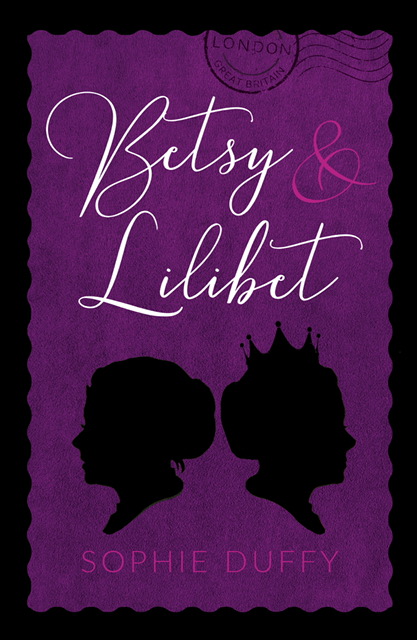
Sophie Duffy is a novelist and teacher. Her first novel, The Generation Game, won the Yeovil Literary Prize and the Luke Bitmead Bursary. Her fourth novel, published by Legend Press, is Betsy and Lilibet. She also writes for Allen and Unwin under the pseudonym of Lizzie Lovell. She is part of the team of CreativeWritingMatters which involves running workshops, appraising manuscripts and  administering the Exeter Novel Prize. Sophie lives in Dawlish with her two Tibetan Terriers and three young adult children who dip in and out. http://www.sophieduffy.com/


About Betsy and Lilibet:

They named me Elizabeth Sarah Sunshine, after the brand new princess, born at the exact same time as me, only across the other side of the river, to posher parents, with a swankier address. The princess was given a string of names that would grow ever longer so that in some ways she would always have more than me. But she didn't get the Sunshine ... 

London, 1926: Two baby girls are born just hours and miles apart. Both will grow up in very different families; each will carry the burden of responsibility, service, and duty. One will wear the Crown of the Commonwealth; the other will bury the bodies of the dead. Over the course of ninety years, their paths will cross three times. This is the story of Betsy and Lilibet.