Showing posts with label The Emma Press. Show all posts

Sunday, 3 May 2026

Suyin Du Bois, "Eating Air"


Suyin Du Bois is a poet of mixed Chinese-Malaysian and Belgian heritage, living in London with her South African husband. Her poems have been published in Propel, Iamb, Stanzas, Bi+ Lines: An Anthology of Contemporary Bi+ Poets (Fourteen Publishing, 2023) and Malaysian Places and Spaces (Maya Press, 2024), amongst others. She is a member of the Southbank Centre’s New Poets Collective 2024/25. When not obsessing over word choice, Suyin spends her time building a profit-with-purpose start-up that seeks to ensure 24/7 access to nutritious, affordable food for NHS hospital staff. Eating Air is her debut pamphlet.


About Eating Air, by Suyin Du Bois
Steam rises from bowls of noodle soup, tender steaks are seared in butter, sand-roasted chestnuts are shared from a paper bag. Eating Air – the debut pamphlet from Suyin Du Bois – is a mouth-watering collection of poems about food, belonging and connection. 

Charting a journey across cuisines and continents, these poems carve into the author’s dual Chinese-Malaysian and Belgian heritage and food's enduring role in our cultural, familial and personal histories. 

From the low stools of Penang’s kopitiams to the bright lights of London's Chinatown, Eating Air is a love song to food and a poignant catalogue of its profound capacity to serve up memory, language, and longing.

You can read more about Eating Air on the publisher's website here. Below, you can read two sample poems from the collection. 


From Eating Air

Ode to Kaya
 
Egg jam first on my young tongue: palm sugar 
sweet, coconut milk rich. Thick layers on charred 
toast, salted butter cubes between, melting in Penang 
sweat. My Goh Ee Poh stood for hours stirring you
in that double boiled heat. Exports to be swaddled, 
twisted into pink and green plastic bags, nestled
amongst swimming costumes and sundresses – rituals
to ward off mid-air leaks in the 14 hours from one home
to the other. Back in England your layers thinned, 
our knives more sparing after each spread. 
After Goh Ee Poh grew too frail, aunties and uncles 
gifted us store-bought surrogates. You were labelled Kaya.
Our cupboards filled with your empties, aides-mémoire
of indulgence repurposed to house fragrant rice, Chinese 
mushrooms, our longing for Nyonya flavours.

By the time pandan leaves arrive in Chinatown, I am grown 
up, have my own kitchen where I can stand for hours.
Goh Ee Poh has long since condensed
into photographs, so I sweeten my never-asked
regret, trace down someone else’s heirloom recipe.
You are needy, threaten lumps, failure, but I stir and stir
like her until my spoon draws the right depths of lineage.
I lift a heap of you into my mouth, tongue 
your clotted grainy sweetness.

Cut Scenes

Dad fusses with his leather school bag / before sitting down to breakfast / by the coal-fired stove / in a 1920s maison de ville I’ve visited from the pavement / my grand-père / who I know from Agfa Billy snaps of walking holidays in the Ardennes / Sunday best studio portraits / has sizzled him a small steak / in a lump of butter / crisped at the edges / deep juicy red in the centre / fried bread on the side / the best way he knows / to sustain his son / on the bundled walk across the tram tracks to school / to protect him / against its respected priests / the wooden blackboard erasers they aim at boys’ heads
 
Dad orders steak in a restaurant / blue / walking to the table / by the excuse-me method of cooking / one part joke / three parts recipe / waiters don’t always get it / my held breath / a kind of grace / I watch for his knife to deliver / deep juicy red / not pink / worse grey / how else / can he see his father again / only when I know / it won’t be sent back / I slice my own / reveal / the fibres that make us 

Sunday, 26 April 2026

Milena Williamson, "Milk & Moon-water"


Milena Williamson, photo by Stephanie Sy-Quia


Milena Williamson is from Swarthmore, Pennsylvania. She has an MA and PhD in poetry, both from the Seamus Heaney Centre at Queen’s University Belfast. Her debut pamphlet, Charm for Catching a Train, was published with Green Bottle Press in 2022. Her debut collection, Into the Night that Flies So Fast, was published with Dedalus Press in 2024. In 2021, she received the Society of Authors’ Eric Gregory Award. In 2022, she received a support for the individual artists programme grant from the Arts Council of Northern Ireland for work that became Milk & Moon-water.


About Milk & Moon-water
A Sudden Stitch. Unfruitful Land. A Fever. 

In Milk & Moon-water, Milena Williamson uncovers 11 Old English metrical charms – ancient incantations spoken to ward off harm – creatively translating them into magical and medicinal spells for the modern reader. 

Alongside each reimagining is an original charm poem, a remixed and new telling of an old text. Covering the climate crisis, illness, ageing and fertility, this collection of charms ranges from the incantatory to the unhinged, and re-engages with the ancient practice of looking to the land and the body for answers to life’s new and persisting questions.

You can read more about Milk & Moon-water on the publisher's website here. Below, you can read two sample poems from the collection. 


From Milk & Moon-water

Charm for Unfruitful Land (Remixed)

The good news is the wolves have returned to Europe.
   The bad news is people are killing wolves again. I own no

underwear from this island. There is no purely wild place left
   on this island. I buy wildflower seeds from the dark web.

I walk on the earth while there is still time and sprinkle seeds
   on riverbanks, lawns and graveyards. The smoke pours

across borders and becomes the sky. It’s time to buy an air filter
   and give it a name. I am stuck inside a well and Europe

is the silver bucket framed against the sky. We are living
   in the overlap. We can create clouds from seawater.

We drilled into Antarctica to find the most transparent ice.
   This ice is compressed by other ice so it’s dark down there,
dark enough to see neutrinos belly-flop into light.

Journey Charm (Remixed)

With eight lanes on the upper
and six lanes on the lower,
the busiest bridge in the world
is a sonnet. Love, we are suspended
in steel between the river and the sky.
Manhattan and a flood warning
is a good backdrop for listing everything
that has spilled on the GW Bridge –
gas and manure and watermelon
and frozen chicken. Upper or lower?
A man once landed a plane here
and survived. Now there’s a woman
on the median selling fresh oranges.
We see the signs. The lanes divide.

Thursday, 12 June 2025

Lewis Buxton, "Mate Arias"


Lewis Buxton, photo by Rosie A Mills-Smith


Lewis Buxton won the Winchester Poetry Prize in 2020 and has a full-length collection out with Nine Arches Press. He regularly visits schools, delivering workshops and performances to young people, and his theatre shows tour extensively in the UK. He lives in Norfolk.


About Mate Arias, by Lewis Buxton
Mate Arias is Lewis Buxton’s love song to his friends, a soaring voice attempting to communicate in a masculine world often punctuated by silence or violence. Muscles are torn, crossword clues are pondered, and pints are lifted as the poet attempts to make sense of his friends and himself, and their often clumsy, physical dances around each other.

Under the glares of floodlights and movie screens, with a backdrop of superheroes and zombies, Buxton creates the settings for new versions of male friendships. A poignant and funny exploration of making and maintaining relationships as lives begin to move in different directions, Mate Arias is a unique celebration of the tenderness and love that can be communicated by men.

You can read more about Mate Arias on the publisher's website here. Below, you can read a sample poem from the collection. 


Working Out 

We lift until our arms are dead rabbits: 
he would prefer we were sat in awkward 
positions, dumbbells slung across our hips 
thrusting upwards, rather than find a word 

for what we are to each other: Mate? Friend? 
Buddy? Pal? Brother? I don’t even know. 
Now we are fit shadows trying to bend 
our bodies into shape. I wouldn’t go 

if you didn’t come with me, Alex says 
as we knacker ourselves on the treadmills, 
horses eating air, speaking through spittle. 
I often turn up alone but most days 

that feels thick and forlorn. It’s nice you’re here 
mate, friend, buddy, pal, brother, whatever.

Sunday, 13 April 2025

Hannah Lutz, "Wild Boar," trans. Andy Turner


Hannah Lutz was born in 1984 and grew up in Ekenäs, in southern Finland. She has an MA from Finland’s Åbo Akademi University. She later moved to Denmark and attended the Writing School in Copenhagen. Still based in Denmark, she lives just outside Roskilde. Her short story ‘Den elfte versionen’ / ‘The Eleventh Version’ won the Umeå Short Story Award, Sweden, in 2011. Vildsvin / Wild Boar is Lutz’s debut novel. Written in Swedish, it was first published as the Danish translation in 2016 by Rosinante in Denmark; the original Swedish text was first published in 2017 by Förlaget in Finland and Albert Bonniers Förlag in Sweden. Her second novel, Selma, was published by Förlaget in Finland and Gutkind in Denmark in 2023.


About Wild Boar, by Hannah Lutz
To witness. To contain. To hunt.

The forests of Småland are home to a growing population of wild boar, once on the verge of extinction. They move in packs at night. Gardens are destroyed, farmland churned up. Yet their illusiveness draws in both visitors and inhabitants.

Ritve is making a pilgrimage from Finland to track them down. Council worker Glenn finds his quiet life disturbed by their night-time visits and his visions of apocalypse. Mia hopes her local history residency in the old primary school will help her grandfather recover his memory and voice.

Told by three people newly arrived in an isolated community, Wild Boar is a compelling and poetic debut from Finland-Swedish author Hannah Lutz about animals and people, their places in a changing ecosystem, and their capacities to grow and to destroy. It is translated from the Swedish by Andy Turner.

You can read more about Wild Boar on the publisher's website here. Below, you can an excerpt from the opening of the novel. 


From Wild Boar
I have seen them, the wild boar, they have found their way into my dreams! Now I know the way they move, the sounds they make when they sneak into the gardens. I have to listen carefully to hear their trotters and snouts in the grass. They are so numerous, so solid, and yet they make such light work of quietly moving around, it’s incredible. Here I am, heavy and warm with sleep. I open the curtains, see the sea. The sheets on the bed are white. 

This is what I know of Hornanäs: to get there I will make my way to Småland, to Tingsryd, and midway between Tingsryd and Linneryd I’ll turn right. In the village there are four or five occupied houses, three or four abandoned ones. In a yellow house, surrounded by apple trees, lives Arnold Falkberg. The landscape is made up of lakes and productive forest. Wild boar hunting is permitted throughout the year. 

Arnold Falkberg often has a camera with him when he is in the forest. Many people film wild boar, most focusing on the hunting. I’ve seen the clips they post on YouTube. In a Swedish Television documentary, Arnold Falkberg is known as The Hunter of Hornanäs, his hunting rifle propped against the armchair during the interview. But now I’ve seen the footage he’s posted, I don’t believe he’s fired a shot at a single wild boar in his life. The hand holding that camera is intent on something completely different. 

Sunday, 22 December 2024

Rachel Spence, "Daughter of the Sun"


Rachel Spence
lives in London, Ludlow and Venice. Her poems explore themes including time, absence, motherhood and water. She has published three pamphlets: Furies (Templar, 2016), Call & Response (Emma Press, 2020), and Uncalendared (Coast to Coast to Coast Journal Winner, 2023). Her debut collection Bird of Sorrow (Templar, 2018) was highly commended in the 2019 Forward Prize. Her prose poem "Venice Unclocked," in collaboration with photographer Giacomo Cosua, was published by Ivory Press in 2022. Her poetry has appeared widely, including in PN Review, The North, The London Magazine, 14 Magazine and Tears in the Fence. Her non-fiction book Battle for the Museum, which explores the relationship between art, power and money, was published by Hurst in 2024.


About Daughter of the Sun, by Rachel Spence
From the gentle rivers of Shropshire to the heat-baked seas of Greece, Daughter of the Sun radiates with mothers and tracks our orbits around them.

Split into two parts, a sonnet sequence recounts Spence’s time reconnecting with her estranged mother – caring for her through illness and grieving her passing – before a bold rewriting of the myths around Medea reimagines her not as a murderous witch but a child-free scientist ahead of her time.

With the power and salve of the natural world always close by, Daughter of the Sun contends with being a mother and a daughter, and also what it means to liberate ourselves of those identities and write our own myths full of freedom and possibility.

You can read more about Daughter of the Sun on the publisher's website here. Below, you can read a sample poem from the collection. 


From Daughter of the Sun

July 1976, your garden, midnightish.
Our worlds distilled to nothing save each other 
and this bewildering heat. I hear you
padding down the stairs – morphine trickle
of a mother’s footsteps – beg you to let me
stay while you find whisky, deckchairs.
The lawn is dry as a ship’s biscuit, but we are 
watered by the scent of your tobacco plants. 
My winter’s bone is being old enough to know 
I don’t know what you’re thinking. Not even 
when the owls come. Two, maybe three,
their beatless wings spellbound against
earth’s pull. Ten seconds we’ll remember
all our lives. We know it, even then. 

Saturday, 19 October 2024

Kathy Pimlott, "After the Rites and Sandwiches"


Kathy Pimlott, photo by Harry Wakefield


Kathy Pimlott’s collection, the small manoeuvres, was published by Verve Poetry Press in 2022 and she has two pamphlets with the Emma Press: Elastic Glue​ (2019) and Goose Fair Night (2016). She has been published widely in magazines, online and anthologies. Her poems have been longlisted, shortlisted and placed in competitions including Magma’s Editors’ Prize (2019); the Poetry Archive’s WordView 2020 Collection; the National Poetry Prize (2023), the Rialto Nature and Place Prize (2023) and the Buzzwords Competition (2023). She leads workshops in-person and online.​​ Pimlott was born and raised in Nottingham but has spent her adult life in London, the last 45+ years in Covent Garden, specifically Seven Dials, home of the broadsheet and the ballad. She has been a social worker and community activist, and worked on a political and financial risk journal, in arts television and artist development. She currently earns her living as the administrator of a charitable trust which undertakes community-led public realm projects.


About After the Rites and Sandwiches

Centred on a sudden accidental death – its shocking actuality, the aftermath, the admin – Kathy Pimlott’s third pamphlet is an honest, lyrical and nuanced journey through the complexity of bereavement.

As the world around her continues on – moths remain attracted to lights, Christmas comes and goes – Pimlott lives with the irreplaceable absence that follows the loss of a partner. Amid the pain and emotion is a streak of wry humour at the mundanity of settling affairs and a powerfully personal trajectory of moving through grief rather than moving on.

Across poems that take stock of the things people leave behind and the sometimes-painful memories of a long and textured marriage, After the Rites and Sandwiches tracks the rollercoaster of grief, guilt and regret without losing sight of the enduring salve of love.

You can read more about After the Rites and Sandwiches on the publisher's website here. Below, you can read a sample poem from the collection. 


From After the Rites and Sandwiches, by Kathy Pimlott

Prologue: First Date

Imagine we stand on a rope bridge over the canyon, where
rhododendrons cling to crevices, daring the corsairs to sever the
ropes with their scimitars, sipping cocktails that don’t make us
any drunker than we are. It’s sunset. From somewhere down
below, a small orchestra and mid-career soprano render Strauss’s
Four Last Songs, which makes the corsairs weep until tears roll
down their tattooed forearms. This lasts for an hour, no sudden
nightfall, no bats. The corsairs exhaust themselves. Chastened,
they return to their three-masted galleon anchored in the bay.
How very lovely the sky – that tenderness before light dies.

Friday, 7 June 2024

Serge ♆ Neptune, "Mother Night"


Serge ♆ Neptune, photo by Sofia Falconi

Serge ♆ Neptune has been called "the little merman of British poetry." He is a Faber Academy alumnus and a queer neuro-divergent poet based in London. His first pamphlet, These Queer Merboys, was published with Broken Sleep (2020). His work was longlisted in the National Poetry Competition and the Winchester Poetry Competition. Several poems have appeared in The North, Propel, The Rialto, Banshee, Magma, Fourteen Poems, and elsewhere. 


Cover Image ©Kremena Chipilova, "Lost in Reverie"


About Mother Night
Mother Night is a hallucinogenic journey across a city with too many alleyways and across a life surviving childhood sexual assault. Forming a nocturnal séance, Serge ♆ Neptune resurrects abusive old lovers and ghosts of the queers of the past – conjures men in cars and men in bedrooms – providing them invitation and shelter, or casting them to stormy waves.

In a book of many types of darkness – across poems of vulnerability and harm – what persists in Mother Night is its celebration of resilience, what shines brightest is the many ways it reaches for the light.


From Mother Night, by Serge ♆ Neptune

my block of flats on the new cross rd
is now a giant record player. memories
crackle from afar. graffiti from the sides

of houses leave the walls, join
the parade of the reckless. night is a bag
of marbles dropped – each one rolling

over cars & people. i succumb
to their pace & weight, their love-tight gripe,
brace & crumble under the pressure

of the encounter. maybe this city
indulges us because it needs to – mother
swan devouring her cygnets – to keep

its foot on us, to cook us slowly.
gravity trips me, i fall. night drips red-hot
on the brain, lifts visions from its marshes.

i squeeze my body to define
my territory against a hostile world. i believe
in my mistakes. i carry them out proudly

like a pair of eyes on a purple glass dish –
my head, crowned with candles.

Saturday, 2 March 2024

Z. R. Ghani, "In the Name of Red"


Z. R. Ghani is from London. She graduated with a B.A. in Creative Writing from Bath Spa University in 2012. Her poems, which explore themes of identity, femininity, religion, and nature, have been published in literary journals such as Magma, Black Bough Poetry and The Adriatic. In 2021 her first collection of poems was shortlisted in the Poetry Wales Pamphlet Competition.


About In the Name of Red
From lips and warmed cheeks to silk and falling leaves, the subjects of Z.R. Ghani's poems radiate with redness. Sometimes a cloak, often a shining symbol, Ghani's reds are sacred and dazzling: pomegranates ripening to jewels and perfectly-placed bindis shining like suns.

But something darker lurks beneath the ruby depths. A city is held hostage by a heatwave, a flame is lit in a dark room, a ballerina twists inside a jewellery box.

As though developing photographs, Ghani shines a deep light over her poems as a tool to slowly make the unseen visible, the unsaid audible. This is a debut book rich with desire, shame, grief, faith, love, and at the forefront of it all: the colour red.

You can read more about In the Name of Red on the publisher's website here. Below, you can read a sample poem from the collection. 


From In the Name of Red, by Z. R. Ghani

Mother

There are reasons to grieve today.
Mother runs a cold tap
over slabs of laundry,
cursing the day she was born.
That unwashed stench of hospital—
flesh, sweat, placenta
lolls over me like a suicide.
Her fourth daughter is a week old;
I’m not the youngest anymore.
I can’t help but steal glances,
though I’ll soon hear haunting  
thuds as she beats herself, 
or threatens to drink bleach.


Thursday, 25 January 2024

Laurie Bolger, "Makeover"


Laurie Bolger is a London-based writer and founder of The Creative Writing Breakfast Club. Her debut pamphlet Box Rooms (Burning Eye) has been featured at Glastonbury, TATE, RA & Sky Arts. Laurie’s writing has appeared in The Poetry Review, The London Magazine, Magma, Stand, and Trinity College Icarus. Her poems and short stories have been shortlisted for The Bridport Prize, Live Canon, Winchester and Sylvia Plath Prizes. In 2023, Laurie’s poem ‘Parkland Walk’ was awarded The Moth Prize, judged by Louise Glück, and Highly Commended in the Forward Prize for Poetry. It features in Makeover (The Emma Press, 2024). Her website is here


About Makeover, by Laurie Bolger
Makeover is a book dripping with nostalgia, cigarette ash and sour cream dip. Lit by too-close TV screens and too-bright calorie counters, Bolger's poems explore growing up, differing bodies and societal expectations. Writing in praise of mums, nans and sisterhood, this is a work bursting with strength, anger, love and, ultimately, hope. In a celebration of girls shaped by swimming baths and Working Men’s Clubs, friendship and family, Makeover contends with what we inherit and what we ought to pass on. 

You can read more about Makeover on the publisher's website here. Below, you can read a sample poem from the collection. 


From Makeover

Stand Together Nicely, Girls

On a stranger’s front steps
you tell me to hold on 
while you sort your hair out,
and to make sure I get the bridge in the background.

I feel like our Mum 
when we were small, 
that one of us two 
stood on our front porch 
in new school uniforms, 
matching grey jumpers
on top of little girl vests, 
or that one of us on Halloween,
you holding out a cauldron 
in plastic witch’s fingers
me dressed as the Phantom of the Opera 
in a bin bag and wonky mask,
or us in the pink bath 
with bubbles on our heads
or matching hats at weddings 
or on the top deck of ferries 
all foreheads and frowns 
or in my graduation gown 
or matching fringes and wigs 
us two dressed as clowns,
or in the beach bar red-faced,
our hair braided like snakes,
or at the Christmas table
in our best clothes,
or you on long car journeys,
mouth open against the window.

On the plane home
I want to wake you up,
tell you that the view is magic,
all those little lights —
rows of humans lean over 
to get a photo out the window.

I take one to show you
I take one for my screensaver
I take one to show our Nan — 
who’s never seen the earth from here.

Thursday, 15 June 2023

Charlotte Wetton, "Accessioning"


Charlotte Wetton’s first pamphlet I Refuse to Turn into a Hat-Stand won the Michael Marks Awards 2017. She has performed at Aldeburgh and Ledbury festivals and came second in the StAnza Slam. Her work has appeared on BBC Radio 3 and at the Manchester Festival of Libraries. She received a New Writing North award in 2019 and is currently a PhD candidate at the University of Manchester. Say hi to her on twitter at @CharPoetry


About Accessioning

Astute, precise, and unsettlingly calm, Accessioning is an index of lives encased in museum glass, and then brought to life.

Through poems about fossilised fruit seeds and the sofa where Emily Brontë died, Wetton questions how we curate the lives of those living and dead in a pamphlet about looking, processing, and memorialising. Whether considering preserved wedding-cakes, a non-existent art exhibition or a human scream, these poems speak to the impossibility of containment and question our ability to map and categorise.

This is a pamphlet of poems about the stories that we tell ourselves, the memories that we construct, and the ways that we value and devalue people, animals and objects alike.

You can read more about Accessioning on the publisher's website here. Below, you can read two sample poems from the collection. 


From Accessioning, by Charlotte Wetton

Specimen Drawers

Ilfracombe Museum

A drawer marked Wedding Cakes: brown patchwork, glistening. My eyes adjust. Flat squares of wedding cake, packed tight. Dark spots of currants, beige icing, twirls of lace, silk flowers. Couples’ names and dates on hand-written labels, 1888, 1956.

*

Imagine it packed, chokingly, in the throat, powdering like 
brown earth, weevils coiling. A long table – eating and talking and laughing in bone-yellow dresses, crunching vitrified marzipan and liver-spot raisins before swaying tiers of cakes, mice burrowing. And a ghost band plays and the first dance is danced forever and ever, souls tethered to a dozen village halls and hotels – the missing slice.

*

Cake should not be an epitaph. It is made to crumble on the tongue, dispersed to cousins and aunts in white napkins, snuck out of tins and off sideboards by the large hands of greedy husbands. Eggs and flour. You cannot carve monuments in cake. You cannot engrave details of contracts. It should not last.

*

A wedding crasher, trophy-hunting up and down the Devon coast – evidence for his mates. A vampire groom, remarrying through centuries, knowing the grief to come. A bridesmaid, light on her feet in butterfly colours: Put a slice under your pillow and you’ll dream of your future husband. And all night faces flicker like train windows through trees. 


Private Tour

Haworth

My mother asked if she could,
for a moment, lie
on the small hard sofa
where Emily Brontë died.
They said no.

Thursday, 6 April 2023

Abi Curtis (ed.), "Blood & Cord: Writers on Early Parenthood"


About Blood & Cord: Writers on Early Parenthood, ed. Abi Curtis

A child is born and everything is made anew. In this blur of new beginnings there are tears and laughter, new words and new silences: this is an unmaking and remaking of the self. From short stories about unnerved fathers and lost mothers, to poems about ‘half-built Lego palaces’ and friends who share their deepest secrets, Blood & Cord is a raw exploration of new parenthood. Voicing silenced conversations about loss, grief, and loneliness, as well as the joys and laughter that are part and parcel of becoming a parent, the stories told within offer a refreshingly honest account of life after new life. This collection is a hand in the dark, offering comfort and solidarity to any new parent.

You can read more about Blood & Cord on the publisher's website here. Below, you can read about the editor and two sample pieces from the collection, by Abi Curtis and Liz Berry. 


About the editor


Abi Curtis is Professor of Creative Writing at York St John University. She has won an Eric Gregory Award and Somerset Maugham Award for her poetry collections, Unexpected Weather (Salt, 2009) and The Glass Delusion (Salt, 2013). She has a PhD in Creative and Critical Writing and is inspired by art, psychology, science and the environment. Her first novel, Water & Glass, a speculative climate-change fiction was published by Cloud Lodge Books in 2017. In 2022 Abi’s short fiction was commended in the Bridport, Fish and Alpine Fellowship Prizes, and a poetic sequence on the subject of a medieval anchoress, set to music by David Lancaster, was performed by the Ex Corde Vocal Ensemble.


From Blood & Cord

On my son, falling asleep 

Your tomcat face is wide, unwhiskered.
Your skull weighty as a coconut  
or the globe. Your ears: shells that sing
not the sound of a shore, but laughter
and sussi, uh, tuks, babbi. 
Your belly swells with cheese and blackberries,
heels of bread, stubs of potato. 

Air purrs inside you, engine-bright.
Milk-white canines tip the hot gums;
you feel for mine with a sharp thumb
to know what your mouth might become,
touch the sighs, the questions.
 
Zipped up with toes in a bunch, 
I lay you down 
heavy as a marrow 
fingers star-fishing for daytime things. Wrapped in the dark. 
Waiting for the strangest dreams.

- Abi Curtis


Godspeed 

When we fuck in sweet darkness  
I leave my body behind, rising 
from her as smoke rises  
from the forging fire. 
Godspeed, I tell her,  
as we part like lovers 
on the threshold.  
I want to begin again, 
move as the creatures  
of the air do, birds, moths, 
ghosts shimmering 
in the empty streets, 
the theremin song of the trees
as they shed their inhibitions
against the gold light. 
The blood and jewelling 
of the body, its grief 
and burden, abandoned
like a unreadable book. 
I wish I could take you with me,  
but one of us must stay  
behind, keep watch  
upon the darkness,  
our sons’ warm limbs  
reaching like tendrils 
from their cots. 

- Liz Berry

Wednesday, 1 June 2022

Joanna Ingham, "Ovarium"


Joanna Ingham writes poetry and fiction. She grew up in Suffolk and has recently returned to live there after twenty years in London and Hertfordshire. Naming Bones, her debut pamphlet, was published by Ignition Press in 2019 and she won the Paper Swans Press Single Poem Competition in 2020. She has worked in community arts, facilitating Creative Writing workshops in a wide variety of settings. She lives with her husband and daughter. Her new pamphlet is Ovarium, from The Emma Press.


About Ovarium, by Joanna Ingham

Tender, loving and visceral, Ovarium is a pamphlet of poems about a giant ovarian cyst. The poet charts her journey with the cyst, from diagnosis to surgery to recovery, and explores the way illness can make our own bodies mysterious to us. 

Ingham's poems are forensic as she looks at the disorientating and sometimes patriarchal language of anatomy and medicine. The collection shines a light on gynaecological illness and surgery, as the poet invites us to consider women's bodies as sites of illness, disgust and shame, as well as healing, endurance and strength.

You can read more about Ovarium on the publisher's website here. Below, you can read two poems from the pamphlet.


From Ovarium

Cyst

I tried to think of you as fruit, growing
against the sun-warm wall of my gut.
Melon-headed, you nudged the leafy organs,
dug out a place for yourself in the plot.
I never guessed. I was only bloody earth
to you, a coldframe full of light.
You went on growing your juicy mucinous 
segments, your membranes of pith,
imagining you were part of me,
that I would want you, pomegranate
arrogant. You grew where I should have
grown other things, gone to seed already.
When you were ripe the doctors cut you 
from my branch, packed you whole in ice 
so you wouldn’t bruise, searched 
your maggoty core for rot. I wish 
I’d seen you, weighed you in my hands, 
breathed your fizzing orchard scent.


A&E

Two days after the blood test for CA125,
after passing the Macmillan stand by the automatic doors
with its rack of leaflets like ‘Preparing a child for loss,’
my terror solidifies into a half-imagined pain,
which I decide may very well be an emergency.

Because we don’t have a baby-sitter
I take a taxi by myself, wait for four and a half hours
on a plastic chair hoping that someone will tell me
they can take it out now, this thing I didn’t know I had, 
with names like mass and growth and tumour. 

I find I wish I had a dislocated shoulder instead,
like the green-faced boy, still in his football tabard,
or that I’d been in a fight like the girl from care,
or that I could sleep like the homeless man beside me,
his head on a black swollen bin bag.

When I’m finally taken to a booth, the nurse 
presses two fingers into my belly, asks if I want 
to feel it, explains that tumour doesn’t always mean
the worst. She diagnoses panic, tells me I’ll have to wait,
that I’m on the red-flagged pathway already.

At three a.m. I call a cab by the maternity block
and a man comes out and cries. I almost comfort him.
The pain is in my chest now, in my mind. 
There is no subject it can go to that doesn’t hurt, 
that doesn’t make me want to live.


CA125 is an indicator for ovarian cancer.


Tuesday, 15 March 2022

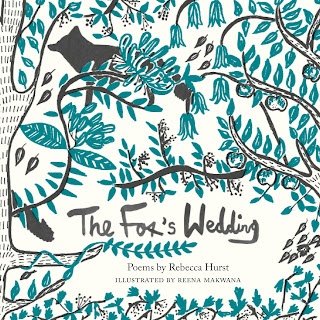
Rebecca Hurst, "The Fox's Wedding"


Rebecca Hurst is a writer, opera-maker and illustrator. She was born in East Sussex and now lives in Greater Manchester. Rebecca’s poetry has appeared in various international magazines, including The Rialto, PN Review, Agenda, Aesthetica, The Clearing, and Magma Poetry. In 2021 a selection of her poems was published in the Carcanet anthology New Poetries VIII. Rebecca has a PhD in Creative Writing from the University of Manchester and was artist in residence at the John Ryland’s Library from autumn 2019 to spring 2020. She is co-founder of the Voicings Collective.

Reena Makwana is a London-based illustrator creating illustrations using drawings, embroidery and print. Her work is influenced by the city, characters, creatures, social past and present. She has produced work for clients including Vittles, Pit Magazine, Endeavour Agency, Lecker, Big Family Press, OOMK and At The Table. Visit her website here


About The Fox's Wedding, by Rebecca Hurst, illustrated by Reena Makwana

Rebecca Hurst’s debut pamphlet is woven through with fairy tales, folklore and landscape. She uses the natural world, family mythology and the theory of fairy tales to unpack, embroider, and explode traditional tales and tropes, exploring themes of voice, concealment, and transformation. Prickling with magic and spells, the poems in The Fox’s Wedding lead us down a twisty path to find – what? A prince made of needles? A cursed box? A golden key? Take care and keep your wits about you; if you’re lucky you might just find your way home.


From The Fox's Wedding

The Unreliable Narrator

Not a field,
a forest.
 
Not a key,
a hammer.
 
Not a sword,
a spindle.
 
Not a chair,
a ladder.
 
She barks
like a vixen
boxing with shadows
in the midnight garden.
 
No guide,
she leaves you
on the mountain pass
to wake in the precinct
at dawn
in a nest of newsprint
while around you
schoolchildren
rowdy as rooks
gossip, smoke, spar.
 
If there is truth
in her
she has yet to find
its edge.
 
Still, when she gives you
a sprig of larkspur
or a glass of tea
take it.
 
The amber leaves
blossom as they steep.
The glass sings.
Take a scalding sip.

Wednesday, 2 February 2022

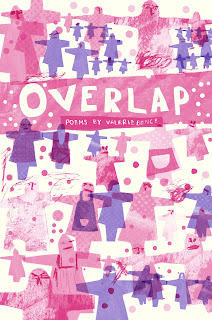
Valerie Bence, "Overlap"


Valerie Bence finished her doctorate in her mid-fifties and completed a Poetry MA at MMU in 2017. She was shortlisted for the Poetry School/Nine Arches Press Primers 4 in 2018, the Fish Poetry prize in 2019, and longlisted for the Ginkgo Prize in 2019. Her first collection, Falling in Love with a Dead Man, was published by Cinnamon Press in 2019. She is a mum and nonna and lives and works in Buckinghamshire.


About Overlap

Valerie Bence’s debut poetry pamphlet is a testament to ordinary lives, and a meditation on grandmothers. Part memoir, part family history, Overlap is a series of vivid vignettes from the poet’s childhood, courtship, motherhood and grandmotherhood, spanning the 20th and 21st centuries.

Bence’s grandmothers Winifred and Harriet are at the heart of this book. She reflects on their hardy, steadfast lives as she too becomes a grandmother, in very different times. Stranded from her family in the Covid-19 pandemic, the poet conjures up their ghosts, walks in their footsteps and – sometimes – feels herself become them.

You can read more about Overlap on the publisher's website here. Below, you can read a sample poem from the collection. 


From Overlap, by Valerie Bence

Collusion
 
From my vantage point under the kitchen table
I watch her knees as she walks by – dimpled,
thick stocking’d in summer and winter,
slippers with holes at the toes,
crossover pinny pockets full of scraps
and peelings for chickens. Grandma Harriet.
 
We mash tealeaves and bran for the rabbit,
the sweet aroma fogging her glasses, and every day
she scrubs bloody butcher’s aprons
for five shillings a week.
We take the clean ones back on the bus,
until the day she faints outside Boots in the rain,
sliding down the wall like in a cartoon,
her wartime hat slipping over her eyes.
 
Thinking she is dead I run into the chemist’s;
a man brings her a glass of water.
Sipping it she squeezes my arm –
Don’t tell him she says, pulling me close.
 
This will not be difficult, as in all my seven years
he has never spoken to me.

Friday, 17 December 2021

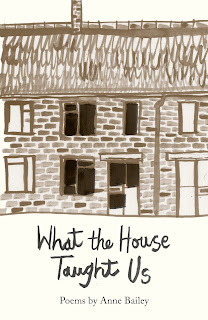
Anne Bailey, "What the House Taught Us"


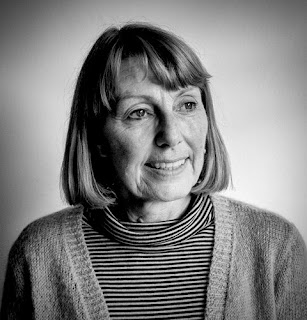
Anne Bailey was born in West Yorkshire, very close to the Pennine moors. She has worked as a teacher, a mother and a couples counsellor in London, and now lives in North Norfolk. She is a committee member for Café Writers. Her poem ‘What the River did Next’ was commended in the 2021 Ambit Poetry Competition. Her new pamphlet of poems is What the House Taught Us, published by The Emma Press. You can find her on Twitter: @Anneebai


About What the House Taught Us, by Anne Bailey

You never know how things really are in other people’s families, in other people’s homes. There’s the public face and the private truths – the personal griefs and tragedies, whether festering or resting in peace. In her wry, engagingly strange poems, Anne Bailey takes the door off the latch and lets us inside. 

She shows us loss and disappointment, as well as hardness and resilience, particularly through the eyes of a daughter, wife and mother. We see the domestic sphere in such close-up detail that it becomes bizarre, an uncanny dimension that nonetheless rings horribly, weirdly true. 

You can see more details from What the House Taught Us on the publisher's website here. Below, you can read a sample poem from the pamphlet. 


Domestic

So you’ve put a picture on the lovely blank wall
that used to go pink in the sun
and feel like an ice cream.
A wall on which I used to rest my eyes
in pleasant contemplation.
A wall which represented air
that could be breathed.
A wall through which it was possible to see
how much space is in the universe.
The distance between one star and another.