Showing posts with label Fly on the Wall Press. Show all posts

Friday, 5 December 2025

"The Subtle Art of Short Fiction," ed. Isabelle Kenyon


About The Subtle Art of Short Fiction, ed. Isabelle Kenyon
The Subtle Art of Short Fiction explores the power of short fiction in today’s fragmented world. Renowned authors and critics offer advanced techniques for crafting nuanced, impactful stories.

Learn to master short story structure, subtext, micro-tension, and sensory minimalism. Ideal for experienced writers seeking to refine their skills in this sophisticated art form, or those who love short fiction, and want to learn about the craft behind it.

The book includes essays and writing exercises by Kerry Hadley-Pryce, Daisy Johnson, Matt Wesolowski, Sascha Akhtar, David Hartley, Mahsuda Snaith, Jonathan Taylor, Sarah Schofield, SJ Bradley and Farhana Shaikh, and has an introduction by Dr Paul March-Russell.

You can read more about The Subtle Art of Short Fiction on the publisher's website here


About the editor
Isabelle Kenyon is the Managing Director of Manchester publishing house Fly on the Wall Press, and was named a Leader of the Year by the Bookseller in 2025. Founded in 2018, she has led Fly on the Wall Press from Small Press of the Year finalist status at the British Book Awards 2021-23 to their win in the North, in 2024. She is the MA Module Leader for "Publishing in the 21st Century" at Arts University Bournemouth, and the author of psychological thriller The Dark Within Them and poetry collections including Growing Pains (Indigo Dreams).​ She previously coordinated the Northern Fiction Alliance and runs PR campaigns for writers and publishers under Kenyon Author Services


From The Subtle Art of Short Fiction

From The Art of Anticipation and Revelation

by Daisy Johnson

I have noticed something recently about children. It is the waiting that they love. My sons sit at the kitchen table watching me, spoons floating half way to their open mouths, eyes wide. I am doing something silly, making a noise or pretending to hide or doing a funny walk. Each time when I stop they call for me to do it again, again, again. I pretend not to, I cannot possibly, no, I am very busy, but they know I am lying. It is this moment of withholding that they find most joyous. The best short stories, for me, carve out most perfectly that delicious space of anticipation.

In Miranda July’s short story "The Metal Bowl," the protagonist describes herself acting in a porn video when she was younger. "I wasn’t directed so much as given a series of props to make my way through, like an obstacle course. A turquoise Teddy bear, a pillow, an empty beer bottle, a metal bowl. Not everything was clear to me (the bowl), but I was too nervous to speak." From this moment we move through the story with a growing question. What was the metal bowl for? The question is an elastic tension which connects us to the protagonist.

In Shirley Jackon’s "The Lottery," the very title of the story is a question which we go in asking: what is The Lottery? The people of a small village begin to gather in the square: "Bobby Martin had already stuffed his pockets full of stones, and the other boys soon followed his example." As with the mysterious metal bowl, we wonder, what are these stones for? Unlike July’s story it is clear that the characters know more than us, that the trembling, questioning tension belongs only to the reader ... 


Saturday, 10 February 2024

Isabelle Kenyon, "The Dark Within Them"


Isabelle Kenyon is a Manchester writer and editor, and the author of 5 poetry chapbooks including Growing Pains (Indigo Dreams) and one short story with Wild Pressed Books ('The Town Talks'). She has had work published internationally in journals such as Ink, Sweat and Tears and newspapers such as The Somerville Times and The Bookseller. She coordinates the Northern Fiction Alliance and runs PR campaigns for writers and publishers under Kenyon Author Services. She has performed at Cheltenham Poetry Festival and Verbose, Manchester, Leeds International Festival as part of the 'Sex Tapes,' Apples and Snakes and Coventry Cathedral's Plum Line Festival.


About The Dark Within Them, by Isabelle Kenyon

A TIGHT-KNIT MORMON COMMUNITY. 

Faith-healer Amber is hopeful about Lehi, the safe Mormon town to which she, her new husband and two kids have just moved. 

BODIES BURIED IN THE GARDEN. 

After the sudden death of her daughter, Amber discovers the community will do anything to keep its secrets.

ONE FAMILY DIVIDED. 

When nothing feels certain anymore, will Amber take a leap of faith, for love?

You can read more about The Dark Within Them on the publisher's website here. Below, you can read an excerpt from the opening of the novel. 


From The Dark Within Them

The Meeting, July 11th 2015

Chad

This was the kind of meeting all diaries were cleared for. Chad stood central in a horseshoe of bodies, an unlikely orchestrator. The floor was his but his tongue lay slack, hiding behind his lower teeth. There was a tremor in his wife’s shoulders which made him roll back his own, and clear his throat for silence. Each sound in the Temple reverberated off the pristine white surfaces.

“Thank you for being here today,” he begun. “I have great faith in the church community and its advice. Hell, we’ve all stood where I am now at one point or another, I’m sure. And today it’s my turn to ask for your help, with our Gilly.”

The open windows seeped humid twilight into the hall and beads of sweat formed under his cotton shirt. He talked slowly, using his hands as an offering. Holding his palms open showed he had nothing to hide: he’d been taught that by his uncle Jim. His audience gazed, unblinking. He wiped clammy paws on his jeans. He was forgetting people knew him here—since he could wobble around the neighbourhood on pudgy toddler legs—and that earned him a kind of immunity from judgement.

“Gilly’s fifteen. Young. She’s … she’s mostly a good kid. Anything badness in her? It didn’t come from her mothering. That’s not to blame,” he nodded with what he felt was warmth at his wife, her cheeks betraying a shade of fuchsia. “Perfect mother in my Amber. She made sure those kids grew up in a loving, attentive environment, and they wanted for nothing—don’t doubt that. But since Gilly moved to Lehi, with young Ivan and their mom, well, she’s been finding getting settled tough. This is a good neighbourhood—we all know that—and Amber and I, we’ve been wanting them to make friends. And these days…well, kids are always on their phones, right? Texting nonstop. She was texting at dinner and, erm,” he paused and pulled on his earlobe, “I asked to see her phone.” He felt Amber’s disapproval nettle his skin and revised: “I took her phone. And that’s when we saw the pictures.” He looked away from his wife’s shrinking form. “To be sending those kind of images to a boy—outside of the church—well, we’re all kind of cut up about it. There’s a kind of darkness in my home these days.”

He breathed out, realising his fingernails had been digging so hard into his palms that they had left indents…He flexed his hands, feeling for the back of a chair to sink into.

“Thank you, Chad,” Brett’s eyes crinkled, kind. “This is exactly the right space to discuss these kind of family dynamics in.” The circle nodded at these words, mumbling approval. “You’ve done the right thing.”

Amber wasn’t looking at him. He shuffled his chair closer to reach for her hand, but she pretended not to notice.


Friday, 27 October 2023

Rosanna McGlone (ed.), "The Process of Poetry"


About The Process of Poetry: From First Draft to Final Poem, ed. Rosanna McGlone

The Process of Poetry is a unique collection of interviews with contemporary poets at the height of their craft. How does a subconscious thought become an award-winning poem? Journalist Rosanna McGlone speaks to some of the country's leading poets to find out. Don Paterson, Sean O'Brien, Gillian Clarke, Pascale Petit, Hannah Lowe, Regi Claire, Joelle Taylor, Victoria Kennefick and others explore the development of a single poem from rough notes to a final version to provide invaluable insights for writers and poetry enthusiasts alike.

You can read more about The Process of Poetry on the publisher's website here. Below, you can read about the editor and from the Preface to the book. 


Rosanna McGlone is a journalist, writer and poetry tutor. She has written more than a 100 features for both national, and international, publications including: The Guardian, The Independent, The Sydney Morning Herald, The Weekend Australian and Salon.com. Rosanna has lived in Australia and El Salvador. Her first radio play, based on the massacre at El Mozote, was shortlisted for the BBC’s Alfred Bradley Bursary Award. Her work has been supported by, amongst others, Arts Council England, The National Lottery Heritage Fund, Hull Truck Theatre, Vault Festival, Green Curtain Theatre and The Old Vic New Voices Programme. Writing residencies include Capricorn Hill, NSW, Australia and The Hosking Houses Trust, Stratford-upon-Avon, England.


From The Process of Poetry

From the Preface, by Rosanna McGlone

No poet publishes a first draft, at least, not until now. Invariably, what you see are carefully honed words, nurtured into being, but what goes on before those words reach the printed page? From my own experience as a poetry tutor for many years, it is clear that most writers have little awareness of the skill and stamina involved in crafting a poem. This was the motivation behind what you are about to read. The Process of Poetry offers an opportunity to explore early drafts by fifteen of the nation’s leading poets and to hear the reasoning behind their development.

These poets have been the recipients of numerous awards including the T. S. Eliot Prize, The Forward Prize for Poetry, The Costa Book of The Year, The Eric Gregory Award, The Creative Scotland Award, The Queen’s Gold Medal for Poetry, Foyle Young Poet of the Year and The Wilfred Owen Award. 

One has been the Scottish Makar and one has been The National Poet for Wales. Several poets have work on school syllabi. Moreover, their expertise extends beyond poetry and includes editing, publishing, judging, translating, lecturing, and overseeing spoken word events. 

How was the project undertaken? I approached a number of poets whose work I admired, poets who come from highly diverse backgrounds and represent us all. I was aware from the start that they would need a willingness to make themselves vulnerable in order to share their expertise. 

Initially, each contributor sent several poems, from which one was selected which best exemplified their craft. Some poets offered very early drafts, or even journal notes, whilst others provided later versions still in need of improvement. The aim was to showcase a wide range of writing styles and redrafting techniques.

A series of interviews was conducted, enabling each poet to discuss the development of their work, some of which is based on traumatic events. Whilst a few writers have given a broad overview of their working methods, others have chosen to focus on the minutiae. Some have analysed single words, others a change to title, subject or form. It is these interviews which form the basis of this book. 

The aim of this project is not to identify and scrutinise every single alteration in each poem. The book raises a number of questions. Where does a poem originate? How do you decide on a title? When do you choose the form for your poem? What are the best approaches to editing your work? When would additional input help? How do you know when a poem is finally finished? What should you consider when assembling a collection? What is a publisher seeking? 

Contributors have offered their guidance on the skills that a working poet requires, entering competitions, translating and writing for performance. Whilst often their advice concurs, I love that it is, occasionally, contradictory. I trust that, as a reader, you will respond to the variation that is presented and take away with you what is most helpful. 

My hope is that this book will preserve the unique insights and materials of living poets for the next generation. Better still, that the value of this undertaking will be recognised and that there will be an opportunity to expand it more widely in the future ...


Tuesday, 3 January 2023

Viv Fogel, "Imperfect Beginnings"


Viv Fogel’s poems have been published in various magazines and anthologies since the mid-70s. She has a collection Without Question 2006 and two pamphlets (Witness 2013 and How it is … 2018). Her poems and her work are influenced by having been adopted by refugee Holocaust survivors. London based, once an art teacher, she is involved with community, social housing and education projects, and since the mid-80’s has worked as a psychotherapist. She is a grandmother to three dual-heritage grandchildren. Her website is here.


About Imperfect Beginnings, by Viv Fogel

Imperfect Beginnings lays its poems out to rest on uncertain terrain. Visa paperwork deadlines hang in the air. New-borns, torn too early from their mother’s breast, learn to adapt to harsh guardianship. 

Belonging and exile are mirrored in the stories of having to leave one’s birthmother—or motherland. 

From narrative poems such as ‘My Father Sold Cigarettes To The Nazis,’ Fogel takes us on a journey throughout history, spanning ancestry, wartime, adoption and peacetime, as life settles. Family, work, love and the natural world provide purpose, meaning and a sense of coming ‘home.’

You can read more about Imperfect Beginnings on the publisher's website here. Below, you can read two poems from the collection. 


From Imperfect Beginnings

My Father Sold Cigarettes To The Nazis 

          for Itzaak Weinreich b.1903 - d.1988

blue-eyed and handsome, he nodded and grinned 
at them through the coffee houses of Berlin, the cakes
and cabaret, a sweet tooth and an eye for women. 

He wrote funny verse, made his friends laugh,
turned horror into humour, played the joker,
protected me from the truth.

My father loved to polish: wooden banisters, 
brass door handles, candlesticks - our boots; 
always polishing. 

Buchenwald was his camp: ‘but Butlins it was not!
I wasn’t meant to hear about the officer’s 
leather belt, his polished boots,

of the baby tossed 
into the air, skull 
cracking beneath the boot.

And once, he upturned the kitchen table, 
mouth foaming, as plates slid 
cracking to the floor. 

He died a year before the Wall came down,
the year my baby was born.
I sat by his bed and fed him

as once he fed me. I stroked his baby head, 
made him smile at my jokes,
as his watery eyes were fading. 

I traced his burnt-scarred arm, tapped 
my fingers along numbers the same blue-grey 
as his veins, longing to unlock his story. 

He held my baby in his arms, just once, 
a little awkward, a little shy, 
a big man   grown small.

 
Mr Rockwell

There are no photos but I imagine you sucking on a cigar,
your stubby nails manicured, a gold diamond ring maybe.

I found the faded list of things you paid for: bonnet and bootees,
a knitted coat, a blanket for the cot, formula milk, adoption fees.

My bewildered mother was made to leave, her breasts full
and aching, and a new home was found for me.

They told me you were fat—a wandering 
hand that patted, groped and squeezed—

but you were their boss and the girls were malleable.
No expectations you told them so nothing lost! 

Your accent thick as the lies you told your wife.
Years later I track you down, call your home. 

A curt voice informs me that you’re dead. 
Click—the contact is cut.  But Father,  

I need your eyes, your smell, your look—
to see how akin the echo 

Wednesday, 7 December 2022

Julian Bishop, "We Saw It All Happen"


Julian Bishop has had a lifelong interest in ecology thanks largely to a childhood in rural Wiltshire. He’s a former television journalist and apart from poetry has a passion for gardens, running and dogs although not necessarily in that order. He’s been widely published and was a runner up in the International Ginkgo Prize For Eco-Poetry. He lives with his family in North London. His website is here


About We Saw It All Happen

The poems in this first collection were written over seven or so years at a time when daily headlines brought more evidence of climate change and our increasing disconnection with nature. Bishop, a journalist who once worked as an environment reporter, talks in the preface about how he feels he failed in raising awareness about the seriousness of the crisis by reporting on the alarming data and hopes the more emotional engagement offered by a poem might have more impact. His approach is often formal, there are villanelles, sonnets and a lipogram among other forms. The book itself is divided into three sections which look at the impact of climate change on the natural world, a second more political and satirical section followed by a third more forward-looking section which offers some more hopeful poems. 


From We Saw It All Happen

At The Ice House

(An 18th century ice house was discovered during work on Regent’s Crescent in London)

Polished mahogany tables heaved
under the weight of Regency treats -
calves’ foot jellies, sweetmeats,
wobbling flummery poised on concealed 

ice-beds, hand-harvested
from Norwegian fjords. Numb-thumbed
cutters, slicing through rime, fashioned
brieze-blocks of ice to fit

into steamships, sawdust-stuffed
to stave off melt, cargoes stowed
between beams of deal below,
cubes cracked big enough

for an igloo the size of the O2. 
Staring now into the brick-lined 
void unearthed in grounds behind 
a stuccoed row, it hits you

how a division of spoils is where it begins: 
with the convivial aristocratic clack
of a vintage hock or an Escubac 
on the rocks, how tickling a gentleman's 

gins counts more to those in power
than the cost of a frosted bourbon, 
those who only ever reflect on 
melting ice when it is raised in a tumbler.


Dung Beetles

(Could vanish within a century - Biological Conservation journal)

Strange that catastrophe should announce itself
on such small feet 
among such humble collectors of dirt, 
street-cleaners, shovellers of stools, 
tunnellers through filth.

Ancient Egyptians saw gods in them, suns in dung
shaped into spheres 
dragged into creepy-crawly underworlds;
guided by starry skies, they deep-cleaned fields,
deodorised cattle dumps.

Photographers fawned over tigers, meercats,
svelte giraffes 
while caddis flies withered in the wings - 
no lightbulbs exploded as spiders dived for cover 
beneath piles of calcified scat.

Globetrotting beetles wade through cesspits
teeming with tailings,
cowpats contaminated by worm controls.
Bugs that make the world go round push up
the daisies, while the planet goes to shit.

Thursday, 8 September 2022

Jo Bratten, "Climacteric"


Jo Bratten is a poet and teacher living in London. Her poetry has been widely published in journals such as Ambit, The Butcher’s Dog, Finished Creatures, The North, Poetry Birmingham, The Rialto and Under the Radar, amongst others. Her debut pamphlet Climacteric (2022) is published by Fly on the Wall Press. Her website is here


About Climacteric

‘Climacteric’ – a noun, meaning ‘a critical period or moment in history,’ or ‘the period of life when fertility is in decline’; or an adjective, meaning ‘critical, decisive, epochal.’ This pamphlet interrogates how we can love ourselves at the climacteric of our lives and of the planet.

Climacteric bubbles with anger and guilt at the failures of both spirit and body and expresses a coming to terms with loss: for the natural passing of loved ones to the unnatural passing of our planet’s ecosystems. These poems also offer solace, for we are not alone – ‘in the fractured dark we’re all doomscrolling / before dawn, lit up like Caravaggios.’ They find joy in the simplest forms of love.

You can find more information about Climacteric on the publisher's website here. Below, you can read two poems from the collection. 


From Climacteric, by Jo Bratten

New Year’s Day

Morning of the new year and I’m scrubbing 
the bath, tugging snakes of hair 
from the stinking drain, wondering 
how so much of me got down here. 

In the cold estuary I’m circling 
black terns under a groggy sky, 
tangling with pintails, shored on a tide 
of mud with the plover and the lapwing, 
stuck in the gullet of the godwit 
and the rare avocet. 
                                I’m far out at sea, 
brining with molluscs, latching on to 
resolute cephalopods like flame, 
waking somewhere in the belly of a whale, 
retched up on your shore, a warning.


Because we have forgotten how to sleep


we are whispering our reasons to strangers; 
we are googling our exes and our symptoms: 
there is a pain in a place, our legs all 

electrical filaments, twanging; our hair 
is coming out in clumps; we are sweeping 
it from corners, from beneath the bed, 

gathering it into our sleepless nest, 
tumours hatching on our ribs like eggs;
our mouths are bubbling with hope 

and peril; we are thinking up good titles 
for poems; in the between spaces we are
having vivid dreams; mine are subaquatic:

I am dreaming of Sponge Bob in a porno 
with an octopus; they are touching 
each other like rain; her tentacles slip-

pering through the yellow spaces of his flesh, 
she is shimmering like caviar, all lips: 
you are thinking there is a tenderness 

in how her suckers clasp his little shorts; 
you know it is not real but after all 
these curdled nights you think it looks like love.


Friday, 7 January 2022

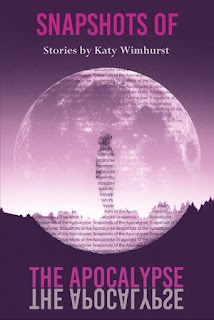
Katy Wimhurst, "Snapshots of the Apocalypse"


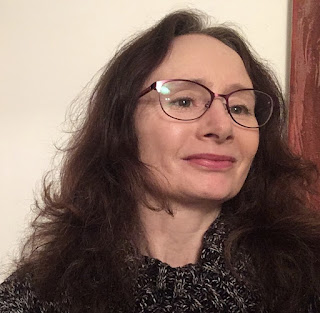
Katy Wimhurst’s first collection of short stories, Snapshots of the Apocalypse, is published by Fly on the Wall Press. Her short fiction has appeared in numerous magazines and anthologies including The Guardian, Shooterlit, Cafe Irreal, Ouen Press, Fabula Press, and Magic Oxygen Literary Prize. Her visual poetry has been published in The Babel Tower, 3am, Ric Journal, Steel Incisors, Trickhouse Press, and others. She studied social anthropology (and Mexican Surrealism at postgraduate level) and has worked in teaching and publishing. She lives by a pretty river, adores trees, and suffers from the neuroimmune illness M.E. Her website is here.


About Snapshots of the Apocalypse 

In these dark, witty short stories, Katy Wimhurst creates off-kilter worlds which illuminate our own. Here, knitting might cancel Armageddon. A winged being yearns to be an archaeologist. Readers are sucked into a post-apocalyptic London where the different rains are named after former politicians. An enchanted garden grows in a rented flat. Magical realism meets dystopia, with a refreshing twist.

More about Snapshots of the Apocalypse can be found on the publisher’s website here. Below, you can read an excerpt from one of the stories. 


From Snapshots of the Apocalypse, by Katy Wimhurst

Min despised the Tate Art and Refuge Centre. It contained little art and more refuse than refuge. She’d been approached by pimps in the café there, had witnessed fist-fights over chocolate, and had once seen an artwork used as a frisbee. But today, staring at the empty food cupboard in her squat, she knew she’d have to go there if she wanted to eat.

“Shit,” she muttered, slamming the cupboard door.

Cursing the guy who’d yet again failed to deliver the bootleg goods, Min grabbed her bag and slung on her black PVC cape and beret. She then padlocked her squat’s front door and marched down the long staircase.

On the ground floor, the sign on the wall read: THE ROYAL COLLEGE OF  URGEONS. If anyone asked ‘what she did’ these days, she said she was an ‘urgeon.’ A reasonable word, she thought, for how she kept urging herself on despite the relentless crap around – and indeed within – her. Fortunately, few asked her ‘profession’ these days. Had it really taken an apocalyptic world to end small talk?

The former Reception area was dusted with cobwebs, its blue carpet muddy with footprints. Min still recalled her first visit to this place years ago as a medical student, but she tried not to think of the past. That was a different era, before the floods and chaos, and she’d never finished her studies, anyway. It’d been how she’d known about this place though, and why she’d come here to hide when her flat near Tottenham Court Road had burnt down in a riot ...


Monday, 1 February 2021

Tina Otito Tamsho-Thomas, "Someone Is Missing Me"


Tina Otito Tamsho-Thomas is a published writer, poet, spoken word artist, writer-in residence, playwright, Black Writing Development pioneer and Human Rights Advocate. Her unique, forthcoming memoir Haunted By The Truth explores identity, adolescence and belonging. Her poem ‘Like Never Before’ was runner up in the Black Artists On The Move, Virtually Living, International Poetry competition 2020. Her work can be found in several anthologies including Red: Contemporary Black British Poetry, Sexual Attraction Revealed and Brown Eyes. Her poetry collection is Someone Is Missing Me, published by Fly on the Wall Press. 


About Someone Is Missing Me

Akulah Agbami, Artistic Director of Sheba Soul Ensemble, writes: “In this highly readable, sorely needed collection, Tina Tamsho-Thomas tackles subjects close to many people’s hearts. There are personal poems and political poems; poems designed to make you grin and others to evoke remembrance of horrors past. Some poems catapult us to the heart of Jamaica, or stir us in our front rooms: as we sip our tea, we are encouraged to expect ‘cake, not crumbs.’ Others teach us how we can mend a broken heart. Some poems deal with emotional, complex questions, such as excluded, absent fathers and the continuing colonialist onslaught on Africa. Someone Is Missing Me celebrates the enduring spiritual relationship between Tina and her excluded, Nigerian father. This collection is guaranteed to empower Black women who seek out her wisdom and is an exhortation to re-position ourselves, to assume our rightful stature.”

You can read two poems from the collection below. 


From Someone Is Missing Me

Dancin in Sepia Dreams

Standing in the shadows
his silhouette calls. I run to him; 
he is not there. I call his name; 
his name echoes on the wind.

It’s warm and sunny, I feel safe,
we embrace, his shadow 
my shadow. I hold him.

He takes my image from 
his inside pocket, a sepia 
negative, I am ten months old.

He has never seen me but
knows I am his daughter.
I have his hands, cheekbones, 
I am tall, proud, head held high. 

The sand is sepia, it is 
warm and sunny, we 
dance together, 
my shadow his shadow.

We dance together for the 
first time. In sepia dreams 
we dance together. In 
sepia dreams together we are. 


Positively Thinking

So you think I’m a mixture 
and my being is a plight,
but aren’t we all a bit mixed up?
So there you are – you’re right.

My mother’s European
Irish, English, French blood too,
her father was an army man,
a soldier through and through.

First, he fought in Africa,
robbed her minerals and gold,
ensured the Empire’s dominance
through Colonialism’s hold.

Then he served in India
for his country and his king,
looted her rich culture,
man, he didn’t leave a thing.

With India divided,
her warm blood upon his hands,
he then oppressed the Irish,
supported Black and Tans.

Next, he fought the Germans,
thirty-nine to forty-five,
to rid the world of fascists.
just to keep his race alive.
He hated every foreigner
who came into his sight,
kicked the Arab and the coloured
to prove might was white.

My devout Catholic Granny
was born on Irish soil,
the church instilled the fear of God,
to keep its women loyal.

At eight she was a worker
in an English corner shop.
with no formal education,
she was worked till she dropped.

When granddad came to court her
she succumbed to all his lies, 
marriage to an army sergeant
meant strict, regimental ties.

Life was hard for grandma Maggie,
thirteen children born in all,
granddad wasn’t just a racist 
as my mother recalled.

Mad Sam - his army nickname,
was also sexist through and through,
when home from kicking foreigners,
kicked his Maggie black and blue.

Of all their growing offspring,
most of them survived,
kept his prejudicial bigotry 
kicking and alive.

They were narrow-minded hypocrites,
who shared the values of the church,
pious at the altar, in the 
foremost pews they’d perch.

The youngest of the family,
a shy girl meek and mild,
grew into the woman who 
would mother this Black child.

The church condemned her as a whore 
for loving a Black man, the family 
screamed their rage profane,
imposed a racist ban.

So I never met my father,
who knows who to blame,
denied his baby daughter,
on me he had no claim,

So, I’m certainly a mixture
from Europe’s melting pot of hate,
a product of a system
that produced this racist state.

But one thing is for certain,
I’m not a mixed-up soul,
conceived in love, both parents
made me absolutely
Whole.