Showing posts with label Smith Doorstop. Show all posts

Thursday, 10 April 2025

Nigel Pantling, "A Foreign Country"


Nigel Pantling served as an officer in the British Army of the Rhine during the Cold War and in Northern Ireland during "The Troubles," as private secretary to Home Office Ministers under the Thatcher Government, and as a merchant banker in the years of rampant mergers and acquisitions of the 1990s. For the 25 years since he has been a strategic adviser to company chief executives. Nigel lives in north London and Somerset. A Foreign Country is his fifth poetry collection. 


About A Foreign Country, by Nigel Pantling
A Foreign Country takes us to some strange places - the exotic, the imaginary and the rediscovered past - and each serves up a heady local brew, equal parts memory, invention, wit and menace. Here, North Korean tourists rub shoulders with Syrian adventurers, the newly dead with a City lothario, Popeye and Olive Oyl with Cold War warriors. Surprising and unsettling by turns, these poems are a whistle-stop journey through different times, countries and customs, enriched by deep personal experience.  

You can read more about A Foreign Country on the publisher's website here. Below, you can read two sample poems from the collection. 


From A Foreign Country

Meeting the General

He’s waiting for me at a reinforced bunker,
a few miles west of Panmunjon.
His arm round my shoulder,
he leads me to the border viewpoint.
He sets out the geography and the history, 
adjusting my perspective along with my binoculars, 
and enlightens me on American imperialism.

We get on well.
Later, his gold tooth glints
when he smiles for the one permitted photograph.
He hopes that I will return soon 
to visit a unified country.
He shakes my hand for the second time,
lights another American cigarette, glints again.


Bosra 

I’m up in the gods, not literally, 
not with Bel or belligerent Baalshamin, 
or Astarte or Atargatis, givers of fertility, 
but theatrically, on the fifty-first tier 
of a semicircle of black basalt blocks. 

I’m sitting quite alone under the sun, 
without benefit of the cloth shading 
or misty spray of perfumed water 
that cooled second century patrons, 
so all I can manage is to stay still 

and watch tourists from a waiting bus 
walk purposefully on from the wings, 
and imagining themselves unseen 
hurtle through some Shaw or Wilde 
or mangle “all the world’s a stage”, 

and thanks to the acoustic skills of 
Roman architects I hear each word. 
Until the heat becomes too much 
and I make my way down to give 
my one-man rendering of Godot.

Tuesday, 18 April 2023

Luke Samuel Yates, "Dynamo"


Luke Samuel Yates has published three pamphlets (with The Rialto, Smith | Doorstop, The Philadelphia Institute for Advanced Study), was a Poetry Society Foyle Young Poet on four occasions, and was selected for the Aldeburgh Eight. His first collection, Dynamo, won the 2022 Poetry Business International Book and Pamphlet Prize. He has recent poems in magazines including Poetry Wales, The Rialto, Anthropocene, Ambit and The North, and he has performed at Aldeburgh, Ledbury, Kendal Calling and on Radio 4. A lecturer in Sociology, he teaches and researches political movements, technology, and consumption practices. 


About Dynamo, by Luke Samuel Yates

Dynamo is a collection of poems expressing anxieties about nature, relationships and situations; and meditates on advice from philosophical teabags, men’s magazines, and the city of Birmingham. Over the course of the book, things break down, start again, light up, get stuck. Relationships stagnate, mountains and seas diminish, White nationalists fall over in Blackpool, and a wealthy couple’s house disappears one day, leaving them surrounded by their appliances, tanned and eating an egg. The book has three sections, each of which is actually three chunks of five poems, so the collection builds up in a kind of fractal shape, but you can still read it as you would something which did not do that. 

You can read more about Dynamo here. Below, you can read two sample poems from the collection. 


From Dynamo

Breakdown
 
The engine gave out when we reached the top.
We were on a B road going over the moors.
Horses grazing on their shadows off West
and in the other direction turbines
gesturing like air traffic controllers.
 
You walked down the road for a signal.
Mum stayed in the passenger seat
with the door open, drinking tiny sips of water.
Flies kept landing on her hands and hair.
I wanted to brush them away but didn’t want to startle her.
 
Some way off you found it and called me over.
A swarm the size of a Cantaloupe melon
clinging to the trunk of a hawthorn. A ball
of bees, chocolate and khaki, barely moving
but all pointing in the same direction.
 
A planet of traffic jams. Going somewhere
but also not going anywhere. We watched
as some left and others arrived,
ignoring us, figuring out
what to do next.
 
If only we could work together
to get out of this fix, you said
when we were back on the road,
back on the motorway, with all
the other people, in their cars. 


Song about putting a bird in a pie

 
A relaxed mind is a creative mind,
says my inspiring teabag. Yours advises
to empty yourself and let the universe fill you.
We pick up the empty flowerpot on the road
and a man in a dressing gown eating tomatoes
leans out of a window and demands
 
that we put it back. I ask him if it’s his pot.
Put it back, he shouts. Put it back.
Each smile is a direct achievement,
I remind him. He replies that gratitude
is the open door to abundance.
We carry on walking.
 
We get onto the future.
When should we panic?
Reading the tea leaves, you say that
happiness arrives when we overcome
the most impossible challenge.
Your bag has exploded.
 
You look at things in such a way that you are not
distracted by being looked at looking at things.
The blackbird sings a phrase then repeats it
like a monolinguist talking to a foreigner.
You can’t believe anybody would even
write a song about putting a bird in a pie.
 
The man from the takeaway under my flat
has climbed into his bin to compress
the rubbish in order to fit more in.
He walks from one side to the other
then back again, like an animal
trapped in the hospitality industry.
 

Friday, 24 March 2023

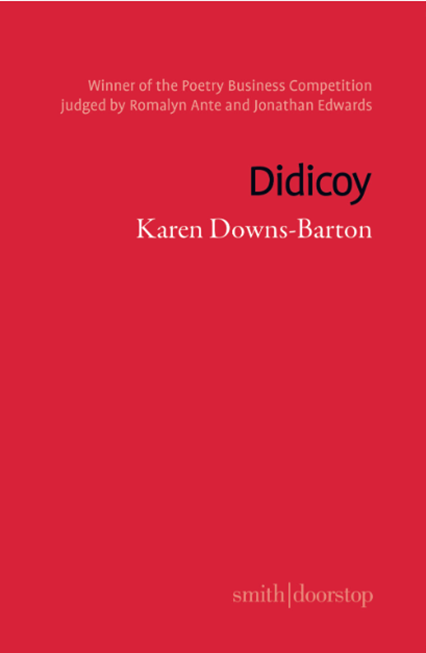
Karen Downs-Barton, "Didicoy"


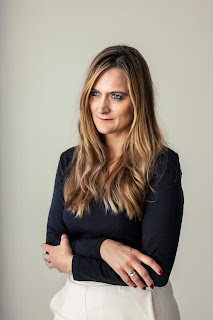
Karen Downs-Barton is an award-winning neurodiverse Anglo-Romani, poet, essayist, and prose writer. After a peripatetic childhood including times in the state childcare system, she now lives in Wiltshire. Karen is the winner of the 2022 International Book & Pamphlet Competition, Cosmo Davenport-Hines prize (2021) and Creative Future silver medallist (2022). She is a PhD candidate at King’s College London, exploring identity and diaspora through minority languages and multilingualism in entertainment industries. Her poetry is widely anthologised, most recently in Wagtail: The Romani Women’s Anthology, and has appeared in translation in Spanish, Farsi, and Russian. Karen’s poems have appeared in The NorthRattle, Tears in the FenceThe High WindowWild CourtInk, Sweat and TearsRiggwelter, amongst others. Her website is here.


About Didicoy, by Karen Downs-Barton 

Didicoy started life as an MA project that had originally been destined to be a collection about the Silk Route. However, during the induction day a lecturer was talking about her recent book about female writers of the 1970s and was asked why one of the writers gave up writing for secretarial work. The response was ‘To put bread on the table.’ I’ve never experienced a room shrinking before but that’s exactly what it felt like. The room shrank to that one statement but not about the writer in question. It shrank to the face of my mother who did what she did to put bread on the table, and the rest is history.  

Didicoy means a half Gypsy living outside the norms of Romani life, and Didicoy is the exploration of my early didicoy life living with my mother in a colourful, if precarious multiracial family. The poems focus on characters at the margins of society bringing their difference into contemporary themes of poverty, diaspora, and chosen identity. My work blends confessional poetics with lyricism and formal experimentation to find new ways to bring in people outside these experiences. The poems harness the sounds, tastes, and sensory delights of eating stolen dog biscuits from paper doilies or watching the ‘professional’ rituals of a mother and the night world she existed within and exploring what it is to belong.  


From Didicoy

Of the Men who Came as Shadows in the Night   

Do you remember the stealthy men   
that knocked at night, whispered negotiations,   
the metal rasp as the chain slid, the door opened. Or when they    
slipped that other world to shadow our days?   
   
They worked in shops Mum scurried past,   
leered from corners, or spilt    
like stale beer from pub doorways. Some spat    
remarks, she’d do her best to explain away.   
   
And always, at that stage,    
we’d move on    
to some fresh place, new start, that was the start    
of the same knocks, same remarks, just recycled.   
   
There’d be a new home, better or worse than the last,    
a new school, friends to make, and a new name   
to grow into, memorised to get it right   
on textbooks. Mum would wait at new school gates   
   
never quite fitting in   
but trying. Once, a policeman picking up children,   
laughed, said he almost didn’t recognise her   
with her clothes on.   
   
And when she said, ‘Not in front of my girls,’ I knew    
we’d be moving again. We were always    
running away from   
something.   


Dear Faye,  
  
ask me   
about the day we were caught stealing   
in auntie Barbara’s dining room  
her posh flat on Streatham Hill  
  
ask me  
about our guilt  
as horrified faces peered under  
the lace edged tablecloth   
and saw an open box  
of dog biscuits   
between us  
  
ask me  
about the bone shapes  
that smelt of Farley’s Rusks  
arranged in coloured rows  
on paper doilies   
  
the pinks were a disappointment   
like blown rose  
petals  
the blacks etched our teeth and tastebuds  
with the grit of fire grate  
ash  

Monday, 8 August 2022

Jackie Wills, "On Poetry: Reading, Writing & Working with Poems"


Jackie Wills has worked for newspapers, magazines and several universities. A former journalist, she’s also worked in business, schools, arts and community organisations, including Unilever, London Underground, Shoreham Airport, the Surrey Hills, the London Symphony Orchestra and Aldeburgh Poetry Festival. She has been a Royal Literary Fund Fellow and run reading groups.

Over three decades, Wills has organised live poetry events and mentored many emerging writers, consolidating her experience in The Workshop Handbook for Writers (Arc, 2016). Her poems feature in several anthologies including Writing Motherhood (Seren, 2017) and Poems of the Decade: An Anthology of the Forward Books of Poetry (Forward Arts Foundation, 2015). Wills has collaborated over many years with visual artist Jane Fordham.


About On Poetry: Reading, Writing & Working with Poems, by Jackie Wills

We begin with a drive to write something that’s never been said before, to protest, to offload, to challenge or catch the zeitgeist. We imagine we write like the poets we admire. Slowly we learn the craft, understanding eventually that a writer’s indentured for life.

Drawing on decades of experience as a poet and tutor, this compelling book is part hands-on guide and part reflection on ways that poetry can make a difference to how we live. It is also a survey of many varied and inspirational writers, especially women poets, especially from the end of the twentieth century. Jackie Wills is herself a brilliantly insightful poets; and, as the sections on writing workshops show, she is also an outstanding teacher. The final section of this unique book offers starting points and resources that will prove essential for new and experienced poets alike.

You can see more details about On Poetry on the publisher's website here. Below, you can read a short excerpt from the Introduction. 


From On Poetry

In the decade I was a mother with young children I bought a calendar with a quote from a poem for each of the 365 days to come. Sometimes reading a couple of lines was about all I could manage but it meant that in the middle of making breakfast, finding shoes under the sofa, combing hair and packing up lunches, I’d hear Emily Dickinson speaking to me from another century and she’d set off a line of thought that walked with me up the hill and down to their primary school. I was juggling writing with earning a living and bringing up children, was often exhausted, but even so, those lines attached to dates were reminders of how lucky I was, and still am, to have the means to read, write, publish. In the old-fashioned way, I stuck some into an exercise book and my homemade anthology lives on a shelf next to my desk holding its pinpricks of thought.

For more than 20 years I’ve sat with groups of people at different stages of their writing lives, experiencing the liberation of metaphor – a child realising they can find words for the other worlds in their head, a man or woman released from the constraints of caring, illness or addiction, from fear of the past and the future, from the demands of work, for an hour or so by listening to a poem and writing their own. Poetry allowed me to do this. And when I read for myself, sometimes flicking through an anthology, sometimes concentrating on a collection for a book group, I am in awe of human invention.

When I began to earn a living running writing workshops, this work kept me reading widely, looking for new poets or poems to use as examples. It focused me on form, on what worked in a poem and it helped me understand how we use the tools of metaphor and language. I used model poems in writing exercises because a mechanic learns to put an engine together by taking it apart. I remembered a big old engine from my Morris Traveller suspended out of its rightful place when the head gasket blew. A poem has to be oily and heavy too. When I embarked on this work, though, I realised how little I’d read. I’ve come to terms with never catching up, but pledged to stretch as a reader. It’s humbling to face this truth about yourself, that however much you think you’ve read, it’s not enough. The flipside is to enjoy the many different ways people express the world, and to accept that there’s some writing you’ll get on with and some you’ll dislike.

Friday, 5 August 2022

Kim Moore, "What the Trumpet Taught Me"


Kim Moore, photograph by Lorna Elizabeth

Kim Moore‘s first full length collection The Art of Falling was published by Seren in April 2015 and won the Geoffrey Faber Memorial Prize. She won a New Writing North Award in 2014, an Eric Gregory Award in 2011 and the Geoffrey Dearmer Prize in 2012. Kim was one of the judges in the 2018 National Poetry Competition, along with Kei Miller and Mark Waldron and a judge for the 2020 Forward Prizes.

Her first pamphlet If We Could Speak Like Wolves was a winner in The Poetry Business Pamphlet Competition, judged by Carol Ann Duffy. If We Could Speak Like Wolves was chosen as an Independent Book of the Year in 2012 and was shortlisted for the Michael Marks Pamphlet Award and the Lakeland Book of the Year Award. Kim’s latest full length collection is All the Men I Never Married (Seren, 2021). 

Kim is originally from Leicester. Her website is here


About What the Trumpet Taught Me, by Kim Moore 

Award-winning poet Kim Moore studied music and was a trumpet teacher for several years. What the Trumpet Taught Me is a collection of vivid and immediate snapshots, from first lessons to music college, and from teaching the trumpet in schools and running a brass band, right through to playing in working men’s clubs in a ten-piece soul band.

Meditative and often funny, these short prose pieces are always open to experience and clear-eyed about the vagaries of class-prejudice and the intricacies of gender in a predominantly male world. The trumpet is the central character that we always return to as we are asked to consider the pivotal role of music in both an individual and social history.

What the Trumpet Taught Me features watercolour illustrations by Emma Burleigh.


From What the Trumpet Taught Me

My parents take us to a brass band, recommended by my new brass teacher, Mr P, as a place we can get an instrument for free. I ask for a cornet, after watching a young girl playing one with a pearl-like sheen. My sister is given a tenor horn. The conductor, who says we can call him by his first name, W, tells us to join in with the rehearsal, though we cannot read music. I’m told to sit next to a girl with a fox-like face.

I don’t understand why the music in front of me has numbers above each note, rather than letters. I don’t understand that the numbers correspond to the valves I should be pressing down. I don’t even know they are called valves. I’m happily playing along, pressing the valves whenever I feel like it. I don’t know a conductor can hear one person playing a wrong note, even when there are thirty other people playing. Eventually, when I find this out, it seems as if it’s a superpower, and one I’ll never possess.

W is an elderly man with bone-white hair. He waves his arms, urging us onward. Although it doesn’t seem as if anybody is looking at him, or noticing what he’s doing, I understand he is important, that the weather of the room starts and finishes with him. 


Thursday, 10 March 2022

Jim McElroy, "We Are the Weather"


Jim McElroy is winner of the 2021 Seamus Heaney Award for New Writing, the 2021 Poetry Business International Book and Pamphlet Competition, and the 2020 winner of the Francis Ledwidge Poetry Award. In 2019 he was selected for Poetry Ireland Introductions, runner-up in the Bridport Poetry Prize, and awarded an Individual Artist Award by Arts Council NI. He has been shortlisted for the Rialto Pamphlet Award, Gutter Edwin Morgan Prize, Bridport Poetry Prize, Cúirt New Writing Prize, runner-up in the Fingal Poetry Prize and nominated for Pushcart and Forward prizes. His winning pamphlet, We Are The Weather, is published by Smith|Doorstop.


About We Are the Weather, by Jim McElroy

We are the Weather is the winner of The Poetry Business International Book & Pamphlet Competition 2021. It is a mature and coherent first collection by a distinctive and compelling writer. The poems present vivid and often pungent scenes of rural life in exuberant and hardworking language, with childhood and family relationships at their heart.

You can see more details about We Are the Weather on the publisher's website here. Below, you can read two sample poems from the collection. 


From We Are the Weather

Pouring the yard 

We shovel sand and stones into the chunter,
shake in cement. The gravel scratch 
of crushed aggregate scrapes 
in the mixer’s churn; hosed-in water 
dampens the crackle of the mortar’s 
lime reaction. The steel belly tilts 
to the turn of the dump wheel, 
remade earth slithers from its iron pout, 
slumps on the ground, buries 
hoof pock, boot print, rut of cartwheel. 

The concrete’s moist slurp greying our boots, 
our shovels shunt its mass across 
the sections, spread its clad to the party wall 
of the link shed; tamper planks 
race the hardening time, slap it flat, 
agitate in ridges, angle gullies for run-off. 

The poured yard drying, hosed-on gallons 
slake its drouth, seep to the darkness beneath. 
Bunkered earth gulps its pallid leech; 
bugs, slaters, scuttle for cover, worms, grubs,  
squirm deep, root growth diverts for light. 
Concrete ripples stiffen across the screed, 
its load bearing ridges grip for tyres.

Weatherbeaten 

My Father took the weather personally, 
watched buds unfurl in whispers, 
the low sun fix its eye on sticky petals. 
The skies spring cleaned, let him work 
in quick skifts. The clouds swept out rains, 
watched his retreats to the shed. 
Its tinny discussions beat the roof, 
spouts gushed to gable barrels, overflowed 
to Buchan traps. Downpours made a river 
of the Hill Road. On Radio Four, 
Athlone, he listened for forecasts, saw 
the mercury drop on the hall barometer. 

The wet patter eased, wider isobars of highs 
circled in the pulsed ripple of puddles. 
The sun cast its width, swole blisters 
on road tar; bullocks snogged the lusty grass. 
On the breeze, the pollen whoosh of rye, 
and boysadear, the hay fever sneeze. 
Then the mood swing: June’s parched glare 
lowered the reservoir, caked earth 
cried out for water; tightening isobars 
swooped, winds swirled, reeled him in. 
His eyes would peel the horizon 
as the wielded knives of Siberian easts 
hacked his cheeks, ripped off petal and leaf. 
In the verge, grounded leaves buried each other. 

Friday, 4 March 2022

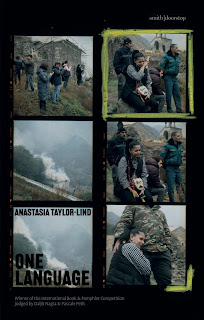
Anastasia Taylor-Lind, "One Language"


Anastasia Taylor-Lind is an English/Swedish photojournalist covering issues relating to women, war and violence. She is a National Geographic Magazine photographer, a TED fellow and a 2016 Harvard Nieman fellow. She writes poems about contemporary conflicts and the experiences she cannot photograph.


About One Language                                                                                                                 

From the perspective of a female photojournalist, these concise but complex and insightful poems draw on first-hand experience of war to explore how damage is generated and perpetuated. The book’s title expresses the contradiction between the lingua franca of photography and the equally universal language of violence. One Language comes to an understanding of personal history and global conflict in poetry that is as immediate and evocative as the most urgent of dispatches.

You can see more details about One Language on the publisher's website here. Below, you can read a sample poem from the collection.


From One Language, by Anastasia Taylor-Lind

Rewind

It’s 9/11 the first time you stay. 
In the morning you bring Taliban poems back to bed.
I drink cardamom coffee and you read their tender lines
‘May you not be hungry in the desert, my dear.’
Their loving as ordinary as mine.

I see wilding men shouldering RPGs 
by the swimming pool of a warlord’s compound 
and think they’re beautiful, watch a dentist 
fall to Earth from an aeroplane rising over Kabul. 

Human payload slipping from the undercarriage,
falling through swipes, scrolls and clicks.
Rewind the tapes, see the little man flying upwards, 
returning to his life, 
rewind the tapes.

Like Bruegel’s Icarus, he touches down with a splash
in a rooftop water tank 4km away, 
his suffering unnoticed except for a casual 
cell phone recording. Twenty years ago, 
the twin towers man fell too, 

twisting and turning, tie fluttering, 
past flames and smoke, for a moment head first 
over Manhattan. Rewind the tapes, 
see the little men flying upwards,
returning to their lives, rewind the tapes.

You and I lie under a marigold embroidered 
bedspread bought in Afghanistan. 
My old friend Tom took me on that shopping trip
in an armoured vehicle with his bodyguard

and I remembered the summer before the end of uni, 
how we sat up late, drinking Jameson, 
listening to Johnny Cash 
and imagining our own deaths, 

together, somewhere in a dusty alley,
all golden light, slow motion and elevated camera angles.
We took it in turns who was doing the dying 
and who was doing the cradling.

Thursday, 3 February 2022

Sarah Barnsley, "The Thoughts"


Sarah Barnsley grew up in the Midlands where her dad was a firefighter. A winner in the Poetry Society Members’ Poems Competition (2021, 2018), her work has appeared widely in magazines including Poetry Wales, The Rialto and The White Review. Other publications include a pamphlet, The Fire Station (Telltale Press, 2015), co-editorship of Truths: A Telltale Press Anthology (2018), and literary criticism. Sarah is Senior Lecturer in English and American Literature at Goldsmiths, University of London, Contributing Editor to The Understory Conversation and lives in Hove. Her website is here


About The Thoughts 

An assured and inventive debut, The Thoughts explores different manifestations of intrusive thoughts as part of obsessive-compulsive disorder (OCD) before navigating through the twists and turns of recovery and love. These poems inhabit therapists’ treatment rooms, waiting rooms, and everyday documents, appearing in such varied forms as emails, research proposals and kids’ puzzles. Compassionate and at times painfully humorous, The Thoughts is an act of advocacy, giving voice to critically underrepresented experiences of illness through poems that are as peculiar and creative as they are arresting.

You can read more about The Thoughts on the publisher's website here. You can read a review of The Thoughts on Everybody's Reviewing here. Below, you can read a sample poem from the collection. 


From The Thoughts, by Sarah Barnsley

This horse

There’s this horse
that can’t eat apples.
It’s not that the horse
doesn’t like apples
or that its castle of teeth
can’t crush them
or that its leather-satchel tongue
can’t collect the bits
or that its upturned welly of a throat
can’t tramp down the chunks – 

it’s that one day,
as it drew up an apple
of no distinction,
the horse had a thought:
What if I choke on this?
And the more the horse tried
to swat the thought away,
the more the apple grew,
and the more the thought grew

until the horse felt it had Jupiter
and all its moons in its mouth
and it couldn’t breathe
and it was gagging
and its owner tried to reason with it,
but the horse wouldn’t be told
and over the course of a year
the horse visited the vet
every Wednesday at 12

and the vet advised the horse
to try an exercise where the horse
had to choose a small globe 
from a bagged assortment
and hold each one in its mouth
in a series of graded steps:
a robin’s egg for one minute, 
a beetroot for two, 
a cannonball for three;

and the horse had to 
commit to the process
and tolerate the discomfort
and by all means note down 
its thoughts and feelings
but not respond to them
and none of this worked
and the only thing for the horse
to do was to eat oats and practise 
radical acceptance
of apples as something eaten
by other horses 
in another place and time
as if all the apples in the world
were locked behind
glass cabinets
in a museum
with all the other things 
the horse’s thoughts had
forced it to give up: 
cool pools, 
hugs of mud, 
low-hedged fields.


Saturday, 10 April 2021

Michael Schmidt, "Talking to Stanley on the Telephone"


Michael Schmidt is the author of several books of poetry. His Selected Poems (Smith|Doorstop) was a PBS Special Commendation. He has written Lives of the Poets, The Ancient Poets and The Novel: A Biography, and he has produced notable canonical and introductory anthologies. He is Editorial Director and Publisher at Carcanet Press and General Editor of PN Review. His latest book is Talking to Stanley on the Telephone (Smith|Doorstop).


About Talking to Stanley on the Telephone

Talking to Stanley on the Telephone rummages through the desires, frustrations and waning faculties of old age. The stories it tells add up to a vivacious celebration of life-spans and the darkening comedy of growing old.

You can see more details about Talking to Stanley on the Telephone on the publisher's website here. Below, you can read two poems from the collection. 


From Talking to Stanley on the Telephone

Exceptions

          Texas, 1950

Yes, I could read.
                            No dogs
or Mexicans the large
round caps declared. ‘Papa,
we can’t go in.’ My new
red passport said as much.
‘They don’t mean us.’ He pushed
open the loud screen door
to a stale interior.

Little white serviettes
defined the seating plan.
Ketchup, French mustard. Our
bug-spattered Pontiac
with dust-dulled number plates
said ‘Mexico D.F.’
It shivered in the heat.

He was right. They didn’t
mean us. We fit, our skin
at home. The slow-bladed
ceiling fan made shadows
surge and plunge, like breathing.
They served us up the stuff
they’d eat themselves, unspiced,
prepared for the littlest
bear, neither too salty
nor sweet, not too hot or
too cold. We sipped, we smeared
bland red and yellow on
our burgers, overdone;

and grinning there, alert,
infernal black and brown,
a monster Doberman.


First and Last Things

There was, first off, the house we seemed to build
          Up in a tree, or under the floor, and lived
With all our creatures and with all we were –
          Pirate and doctor, sailor, angel, priest;
And then the first house made of mud or brick
          Furnished with whatever we could find
Of real stuff, like wood and parakeets
          And cushions, pottery and even framed
Pictures on the walls, they were real walls,
          Nails could be driven into them.
The pictures were of us as we grew older
          And they faded with us too as we grew older
The way pictures do or antique mirrors
          Discolour as the isinglass gets tired
Of showing what is there and turns instead
          Interpreter, an eschatologist
Who shows only what will be, which in the longer term
          Is, after all, what is, and ever shall be.

Wednesday, 23 December 2020

Nigel Pantling, "It's Not Personal"


Nigel Pantling has been a soldier, a civil servant and an investment banker, and for the last twenty years has advised chief executives of companies on strategy. He has written about these worlds in two pamphlets, Belfast Finds Log (Shoestring Press, 2014) and Hip Hind Hook (Smith|Doorstop, 2018), which relate the dangers and human frailties he saw as a soldier in Northern Ireland and during the Cold War, and in his first full collection Kingdom Power Glory (Smith|Doorstop, 2016) which lifts the lid on the secret worlds of Whitehall and the City. 


About It’s Not Personal 

It’s Not Personal (Smith|Doorstop, 2020) evokes a life, from childhood in the fifties, through the challenges and eccentricities of the workplace, to the unpredictability of family, love, and death. These are poems concerned with truth; but just as importantly, with what it means to tell a story. You can watch Nigel reading from It's Not Personal at the on-line launch, hosted by Martha Sprackland, in November 2020 here. You can read three poems from the collection below.


From It's Not Personal 

On the Way Home from Choir Practice

He was older and bigger than me, and his punch
was as glorious and unexpected as
when we trebles hit the top A in the Kyrie.
I’d done nothing to deserve that.
Oh my outrage as I named him to the police.
I wanted him tracked down, humiliated, punished.

The doubts took years. Had I provoked him?
Maybe I’d exaggerated my shock and the pain?
His mother, when she came round to apologise,
blaming it all on her being so ill with the cancer:
how had she deserved that? And how had he?
I’d pressed charges: where was the mercy in that?


Something My Girlfriend Said to Me

Do you remember, when you were a boy,
how the chimes of an ice-cream van
could bring on a rush of excitement,
how you struggled with the choice –
a strawberry mivvi, a rocket lolly,
or a 99 with hundreds and thousands –
how different each felt
in your mouth,
on your tongue,
how wonderful
it was to know that
if you chose a mivvi today,
you could still have a 99 tomorrow?
Well that’s how it is with me and men.


Final Interview for MI6

I

There are five of them this time, seated in a row.
No introductions and no name cards.
They give you a hard time but you keep going.

Then the young woman, surely the most junior
but doing most of the talking, tells you to imagine
you’re in a hostile country, and to choose one of them
to be the local you have to entrap, suborn, entice,
seduce or otherwise persuade to come over.

She gives that look you’ve got wrong before, so you choose
the blimp beside her, and greeting him like an old friend,
commiserate on his child’s poor health, and then pretend
you’ve had him photographed as he takes your gift of cash.

When you arrive home, the offer letter is on the doormat.

II

Slippery bastard chose me. 'Hello Mikhail, it’s good to see you,
let’s have a beer, and I’m so sorry to hear the baby’s poorly.'
Chummy as you like. Perfectly believable. Of course I just blinked.
Took some time to get to the point, but at last he offered me cash,
for 'medical treatment,' one diplomat to another, no questions asked.
When he mentioned the camera, it could have been me thirty years ago.
I was for saying no. But none of the others had been in the field.

Tuesday, 11 August 2020

Jonathan Davidson, "A Commonplace"

Jonathan Davidson, photo by Lee Allen

Jonathan Davidson was born in 1964 and grew up in the Didcot, South Oxfordshire. He has lived for many years in Coventry and now lives in Birmingham. He won an Eric Gregory Award from the Society of Authors in 1990 and his first collection of poetry, The Living Room, was published by Arc Publications in 1994. This was followed, seventeen years later by Early Train (Smith|Doorstop, 2011). He has also published three poetry pamphlets, Moving the Stereo (Jackson’s Arm, 1993), A Horse Called House (Smith|Doorstop, 1997) and Humfrey Coningsby: Poems, Complaints, Explanations and Demands for Satisfaction (Valley Press, 2015), and an e-book Selected Poems (Smith|Doorstop, 2014). His combination of memoir and criticism, On Poetry, was published by Smith|Doorstop in 2018 and his latest collection is A Commonplace (Smith|Doorstop, 2020).

He has had eight radio plays broadcast on BBC Radio Three and Radio Four, along with radio adaptations of Geoffrey Hill’s Mercian Hymns and W. S. Graham’s The Nightfishing on BBC Radio Three. His stage adaptation of Mary Webb’s novel Precious Bane was produced by Interplay Theatre and toured extensively in 2008 and 2009. He has produced six poetry-theatre works, his most recent touring shows were The Hundred Years’ War (touring in 2014/15) and Towards the Water’s Edge (touring in 2016/17), both co-productions with Bloodaxe Books and the Belgrade Theatre Coventry. Jonathan's website is here


About A Commonplace
By Jonathan Davidson

Poems – my own and other people’s – are scattered across my life. They are in books and notebooks, folded in wallets and hidden in desk drawers; a few are memorised. They are as commonplace as food and drink. I wouldn’t want to live without them, although I dare say I could. They will be the last things I forget when I have forgotten everything else. Some of these poems are gathered together in this book, A Commonplace.

A Commonplace is a collection of my own poems interleaved with other people’s poems, poems I admire and that give solace or inspiration. As there are things I want to say about my own poems, and about those by other poets, I have included an on-going commentary. This isn’t something I’ve done before, but it has made me think about how poetry is released into the world.

You can order A Commonplace here. Below, you can read two poems from the book. 

 
Borders

They are bringing back the borders.
So a night train whines to a dead halt
and in the blazing darkness of suspicion
uniformed men – just doing a job – thump
through doors and fill the corridors
with their orders and mistrust.

They are looking for the others, not you.
But still, your eyes look to your shoes
in need of spit and polish. You hope
they do not stop. They stop.
You hear the hum of electricity.
Voices demand papers. And it begins.
 

Live Broadcast

Too late to go out and nowhere to go
anyway, I content myself with this
celestial but dis-concerting music,

a Brandenburg by J S Bach, which they enjoy
in London very much. Your message says
you’re sitting down to listen to it too,

or busying yourself with things that must
be done, or watching as the last high clouds
grow dark. Although we are alone the gods

of digital transmission have ensured
the sound they give to me they give to you.
Now all that is between us is the music,

which is not anything at all, but keeps
our little minutes and our little thoughts
in its design, so that we can be known

each to the other, keeping time, until
the final notes have died away and grand
applause releases us back to our selves.


Wednesday, 9 October 2019

Jonathan Davidson, "On Poetry"


Jonathan Davidson was born in 1964 and grew up in the Didcot, South Oxfordshire. He has lived for many years in Coventry and now lives in Birmingham. He won an Eric Gregory Award from the Society of Authors in 1990 and his first collection of poetry, The Living Room, was published by Arc Publications in 1994. This was followed, seventeen years later, by Early Train (Smith|Doorstop, 2011). He has also published three poetry pamphlets, Moving the Stereo (Jackson’s Arm, 1993), A Horse Called House (Smith|Doorstop, 1997) and Humfrey Coningsby: Poems, Complaints, Explanations and Demands for Satisfaction (Valley Press, 2015), and an e-book Selected Poems (Smith|Doorstop, 2014). His combination of memoir and criticism, On Poetry, was published by Smith|Doorstop in 2018. He has had eight radio plays broadcast on BBC Radio Three and Radio Four, along with radio adaptations of Geoffrey Hill’s Mercian Hymns and W.S.Graham’s The Nightfishing on BBC Radio Three. His stage adaptation of Mary Webb’s novel Precious Bane was produced by Interplay Theatre and toured extensively in 2008 and 2009. He has produced six poetry-theatre works, his most recent touring shows were The Hundred Years’ War (touring in 2014/15) and Towards the Water’s Edge (touring in 2016/17), both co-productions with Bloodaxe Books and the Belgrade Theatre Coventry. He is director of the project management company Midland Creative Projects Limited, Joint-Founder of the Birmingham Literature Festival and Chief Executive of Writing West Midlands. He is Chair of the National Association of Writers in Education.

Featured below is an extract from Jonathan's wonderful book On Poetry (Smith|Doorstop, 2018). Further details about the book can be found on the publisher's website here


From On Poetry 

In the mid-1980s the Yugoslavian poet Ivan V. Lalić came to the city of Leicester to give a poetry reading.[1] It was arranged by the poet Catherine Byron and by her then partner, the poet Michael Farley.[2] Ivan V. Lalić died in 1996. I haven’t heard of Catherine for a while and I long ago lost contact with Michael.[3] Wherever they are this little event that they engineered still resonates with me. It was unusual. It was typical. Poets and others gathering in a city in the English Midlands to listen to poetry in its original Serbian and in English translation was unusual. That there were only about a dozen of us there to listen was typical. I was in my early twenties and it was my first experience of poetry in translation and the first time I had met a poet from an alien poetic culture. Had I known more about poetry I would have known that there are no alien poetic cultures but my diet had up until then been exclusively the poetry of the English language, and mostly the poetry of English poets. And mostly dead English poets. Lalić was a poet working beyond the range of my experience. Despite this, I remember watching him take off his belted fawn overcoat at the start of the reading and turning to look at us as if we were already his part of his world, as if we were citizens and contributors to a Poetry Commonwealth. And we were. Both. 

Lalić was a gentle, quietly spoken man. He was the object of our intense attention but he presented himself modestly, aware that he was a dignified curiosity. If he was concerned about whether his poetry would mean much to us in its English translation he didn’t let on. Carefully he read the translations and carefully we listened. Each poem was let loose into the room as if at its moment of creation. And for those of us who hardly knew this poet existed, it was as good as hearing the poems at their making. The translations may have been particularly fine, his introduction to each poem may have given us just what we needed, or the background hum of the Leicester inner ring-road may have been the perfect incongruous detail. Or perhaps it was that Lalić’s poems had something that carried them easily across the disputed kilometres and through the dangerous century. They went from the past into the future. None of us knew then what a broken future it was to be. 

I have comes across his poems now and then over the decades that followed, most recently “The Spaces of Hope,” translated from the Serbian by Francis R Jones.[4] This was published in the UK a few years after Lalić’s reading in Leicester, but he may have read it in manuscript form. It is a deceptively direct and simple poem. It does not, in translation anyway, rely on poetic sleights of hand or obtuse references – although the details are not entirely universal. It is not a work of imagination so much as a work of reflection. The title, despite being rather abstract, echoes through the poem and gathers meaning. There are some agile phrases. “A starless night lit only / By a book on the table” is a lovely idea and a lovely image. The poem is a perfect meshing of the facts of the matter with precise analysis of their potential implications. 


The Spaces of Hope 
by Ivan V. Lalić 

I have experienced the spaces of hope,
The spaces of a moderate mercy. Experienced
The places which suddenly set
Into a random form: a lilac garden,
A street in Florence, a morning room,
A sea smeared with silver before the storm,
Or a starless night lit only
By a book on the table. The spaces of hope
Are in time, not linked into
A system of miracles, nor into a unity;
They merely exist. As in Kanfanar,
At the station; wind in a wild vine
A quarter-century ago: one space of hope.
Another, set somewhere in the future,
Is already destroying the void around it,
Unclear but real. Probable.

In the spaces of hope light grows,
Free of charge, and voices are clearer,
Death has a beautiful shadow, the lilac blooms later,
But for that it looks like its first-ever flower.


Lalić was never a familiar name, despite his reading in Leicester, and since his death it is all too easy to assume that his poetry has stopped emitting light. This poem proves this is not the case, it is so powerful still. Sometimes, I think, it is important to read the poems that are furthest from us – in age or geography or cultural background – because what manages to be transmitted across time and space and from language to language, that will be poetry. This is what I want as a reader and listener, from out of the static and white noise, to suddenly receive poetry. However distant the galaxy – a poem can take hundreds of years for its light to reach us – reach us it may. It demands some work. It can be terribly inconvenient to have to have our receiving dishes constantly turning day and night and to pick out the verse from the interference and static. 

It is an exaggeration to say that as a reader I have preferred to travel on foot and across open country with nothing but the stars for guidance but I do like to take the back roads. Which is in itself somehow fitting as poetry can be at its most powerful when, having offered us the ambiguity of metaphor and simile, and the formlessness of abstraction, and the beguiling clatter of consonance, and all the many other doors and chambers through which a poem passes, the road rises and the mist suddenly clears and we find ourselves on a hill top staring at a star we didn’t know existed.[5] Re-reading “The Spaces of Hope” I imagine how Lalić must have set out to discover what this almost gauche abstraction might mean for one who had lived through the Second World War, who had grown up in a country within a country, who knew the bloody uncertainty of history. He might have written a memoir or a history book, but he chose to write poems. And in this instance, he focussed on a street in Florence and the railway station at Kanfanar.[6] And, most tellingly, on little lilac flowers.[7] Things both particular and universal. The poem, created so many years ago, is received. Still. Like light. 

Although it was Anvil Press Poetry in the 1980s who were making the work of Lalić available to readers in the UK, it was Bloodaxe Books who did most in my 20s to introduce me to poetry in translation. I was slightly too young to register the impact of the Penguin Modern Poets in Translation Series but Bloodaxe continued the work of this series by intercepting and making public the poetry of poets from a politically volatile Eastern Europe. They published, for instance, the Czechoslovakian poet Miroslav Holub and the Romanian poet Marin Sorescu, both of whom wrote from within political systems that seemed to simultaneously celebrate and frustrate poets and poetry. While at Leicester Polytechnic I helped make a performance of the poetry of Russian dissident poet Irina Ratushinskaya, drawn from the collection No, I’m not afraid, published by Bloodaxe in 1986. Her story, we reasoned, would be more powerful if her poems were performed. The audience, the performers, the poems and the poet, would all have made a connection. Even if she were imprisoned – as she had been – her poetry could be released. Poetry can make its own moments. It can at least help to change the world.[8]

In the early 1990s I was in the position to invite poets to give readings.[9] The details are hazy, but somehow I arranged for Miroslav Holub to visit the steel making town of Scunthorpe in North Lincolnshire. He read the English translations of his poems and they seemed at the time to be perceptive and wise. Perhaps he wrote with the knowledge that for his work to have an audience beyond that of his small country he would have to be translated, and there is a sense in his best work that nothing has been lost in translation. Here is his poem “The Door,” translated by Ian Milner:[10]


The Door 
by Miroslav Holub

Go and open the door.
         Maybe outside there’s
         a tree, or a wood,
         a garden,
         or a magic city.

Go and open the door.
         Maybe a dog’s rummaging.
         Maybe you’ll see a face,
         or an eye,
         or the picture
                  of a picture.

Go and open the door.
         If there’s a fog
         it will clear.

Go and open the door.
         Even if there’s only
         the darkness ticking,
         even if there’s only
         the hollow wind,
         even if
                  nothing
                           is there,
go and open the door.

At least
there’ll be
a draught.


As with so many poems by Holub, it speaks with a clarity which makes the ambiguity of his intent more powerful. We can assume that for much of his writing life Holub was having to say one thing and mean another.[11] And perhaps his career as a scientist ensured that he wrote with a certain detachment, the better able to present his observations. Certainly this poem is a long way from the personal introspection that marked so much poetry written in the same period in Western Europe. His personality is absent. With good reason. The poet, perhaps, had been asked to step into a side room to have a word with some gentlemen from the Ministry. So we are alone with the poem. Just us and the words. We hear footsteps in the corridor outside and doors opening and closing, but there is just enough time to appreciate the suggestion that the poem offers, that other ways of living are possible and that a country – that individuals – should have the nerve to find out what they might be. 

Not long after that reading by Miroslav Holub I went to see the film Manon des Sources, screened at the Scunthorpe Film Theatre, then run by my friend Tony Whitehead.[12] This was still the days of films arriving from wherever they had been last shown in a series of shallow tins, each numbered so that the projectionist knew in which order to screen them. Shortly after the opening credits and a bit of Gallic action, we witnessed one of the lead characters, Ugolin, committing suicide by hanging himself from a tree.[13] But that can’t be right, we thought, surely that’s part of the grim denouement? And then what must have been the next reel was screened and we were somewhere in the middle of the story. We did our best but couldn’t make head nor tail of it. Then the screen went dark. Tony came on the address system to say that the reels had been mixed up by the clots at the Grimsby Film Theatre so he was just going to have to screen them one by one and could we give him a shout when it all made sense. It took four hours but it was an oddly profound experience. Which is what writing poetry may be about, just giving a shout if we think, even momentarily, that it all makes sense. Which was what Ivan V. Lalić was doing, that evening in Leicester. And what I still listen out for. 


Notes
[1] This was before the Yugoslavian wars of succession in the 1990s. 
[2] Catherine Byron was the first published poet I met, at the age of 21. She was also the first person to refer to me as ‘the poet…’ Michael Farley was the second published poet I met. They ran a poetry workshop for the Workers Educational Association in Leicester. I went when I was a student at Leicester Polytechnic. I told none of my friends. Poetry begins in secret. 
[3] When I last spoke to Catherine, a few years ago, she had given up writing poetry and left England. She sent me a book, Salmon: A Journey in Poetry, 1981-2007, as part of a dispersement of her library. So poetry is passed around. Michael Farley I lost track of many years ago – this was before social media – but occasionally I meet people who knew him. He was beautifully serious.
[4] From The Passionate Measure, Ivan V Lalić, translated by Francis R Jones, Anvil Press Poetry, 1989, and included in Centres of Cataclysm, edited by Sasha Dugdale, David Constantine & Helen Constantine, Modern Poetry in Translation/Bloodaxe Books, 2016.
[5] Or, “Silent, upon a peak in Darien,” as Keats suggested in his poem “On First Looking Into Chapman’s Homer.”
[6] Kanfanar is a small village in Croatia and lies at the interchange of the Istrian Y expressway/motorway B8 and A9, as well as on the Divača to Pula railway, and was formerly the junction of a branch-line to Rovinj, so I believe.
[7] Oh, and odd that “lilac” should be an anagram (minus the accent on the ‘c’) of Lalić. Odd, irrelevant, but apt.
[8] Irina Ratushinskaya was released from a Soviet labour camp in late 1986 and the poetry she had written while in prison added to the mounting pressure on Mikhail Gorbachev to introduce Glasnost which led eventually to the end of the Soviet system.  
[9] I was Literature Development Worker for South Humberside based in Scunthorpe, with Grimsby as the other jewel in my crown. I had a small budget and a telephone on a desk in Scunthorpe Central Library opposite Brigid, the Dance Development Worker, and with the Music Development Worker, Dan always off somewhere banging cans and singing, and the Film Theatre just downstairs run by my dear, late friend Tony Whitehead, who loved Carry on Films and Avant Garde French Cinema, and could tell the difference between the two. 
[10] Poems Before & After: Collected English Translations, Bloodaxe Books, 2006. 
[11] Although he was not overtly political, after the Prague Spring of 1968 Holub became a non-person in Czechoslovakia. 
[12] A film released in 1986, directed by Claude Berri and adapted from the novel by Marcel Pagnol. 
[13] And so apparently ending the long line of the Soubeyran family.